
Your PEEK Into The Day: 5 Stories That Deserve The Front Page

Peek TV | September 15, 2026
Black Day, Fresh Blood: Manipur’s Fault Lines Are Multiplying
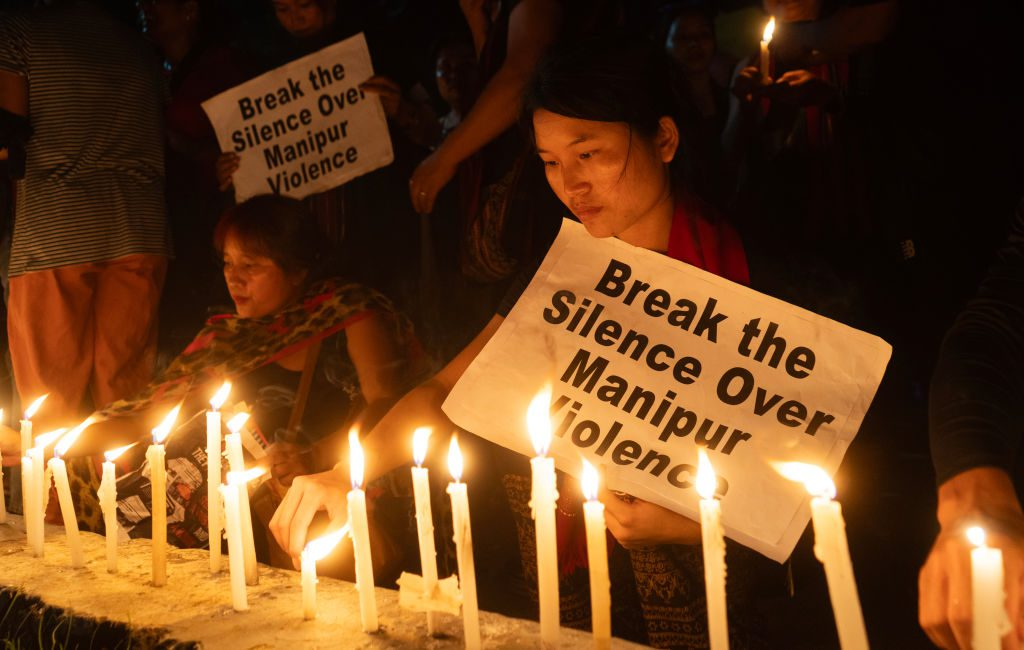
The Fact: A Manipuri child has been orphaned in fresh violence in the state after his parents were shot dead in Tamenglong district on September 13. The same day, two other Kuki civilians were killed in the neighbouring district while reportedly out shopping for their home. One of them, a woman in her 30s, was reportedly pregnant. The Kuki-Zo council has blamed armed Naga groups for the killings.The attacks took place on September 13, a day observed by the Kuki community as “Black Day” to remember the nearly 100 Kuki civilians killed by armed Naga groups in a single day in 1993, during the Naga-Kuki clashes of the 1990s. That conflict, rooted in competing claims over land and political territory, subsided after ceasefire arrangements with Naga armed groups, but the underlying territorial disputes were never fully resolved.
The Context: Manipur’s latest violence comes against the backdrop of a conflict landscape that has become increasingly fragmented. The ethnic violence that began in May 2023 was largely between the valley-based Meitei community and the hill-based Kuki-Zo community. More than 300 people have been killed and thousands displaced. The recent violence, however, has opened another front between the Kuki-Zo and Naga communities, with 34 people reportedly killed in Naga-Kuki violence this year. Four Naga civilians were killed in an ambush in Kangpokpi on August 27. Four days later, three Kuki civilians were killed and four injured in an attack in the same district, followed by attacks on Naga villages and the burning of homes. The violence has also left dozens missing. In May, 48 people were abducted in separate incidents involving Kuki and Naga groups. Fourteen Kuki civilians were later released, while six Naga civilians who had gone missing were found dead in June, with authorities beginning DNA identification. Successive governments, including the Modi government, have pursued agreements and ceasefire arrangements with Naga and Kuki armed groups. But the fundamental questions around territory, competing claims to ethnic homelands and control over land in Manipur’s hills remain unresolved. The recent killings show how these old fault lines can turn violent again.
The Peek Insight: Manipur’s conflict has become increasingly fragmented, while the questions at its heart remain unresolved. The state now has multiple communities carrying the memory of past killings, displacement and competing claims over territory, while trust in the government and security forces has eroded. Experts have repeatedly criticised the government’s approach to Manipur for treating its ethnic conflicts primarily as a law-and-order or security problem, rather than as a political problem requiring consensus between the state’s competing communities. Agreements with armed groups and security arrangements can contain violence, but they cannot by themselves resolve competing claims over land, political territory and ethnic homelands. The handling of the Meitei-Kuki conflict has also deepened this problem. The violence since 2023 has fragmented the state further, hardened ethnic divisions and increased the mistrust that communities have towards the state. As communities have increasingly felt that they cannot rely on the state to protect them, many have turned towards their own armed groups and community-based security networks. That has made an already complicated conflict even harder to resolve. The Naga-Kuki conflict predates the violence of 2023 by decades. Its roots lie in competing claims over land and political territory, and the ceasefires that brought the armed confrontation of the 1990s under control did not settle those underlying disputes. The recent killings show that those fault lines remain very much alive. This is why the government’s continued engagement with Naga organisations, Kuki representatives and armed groups is important, but insufficient. The larger challenge is to create a political consensus among communities that have competing claims, deep grievances and very little trust in one another or in the state. A child losing both parents in fresh violence, a pregnant woman reportedly among those killed, villages being attacked and people continuing to disappear are signs of a conflict whose political roots remain deeply embedded. Manipur needs an urgent political effort to address these fault lines and rebuild trust between its communities. And it needs sustained national attention. While the country’s political conversation is consumed by everything from “naraaz phupha” and “dimaagi naxal” to what women actors should wear in advertisements, the people of an Indian state are still being killed. Our political leaders would do far more good for the country by talking about them.