Your PEEK Into The Day: 5 Stories That Deserve The Front Page

Peek TV | September 08, 2026
A Musician Silenced By A Mob: How Intolerant Is India’s Capital Becoming?
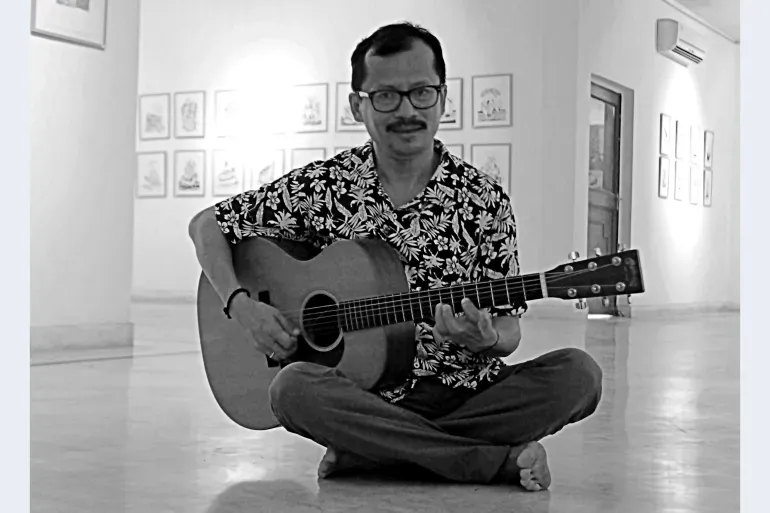
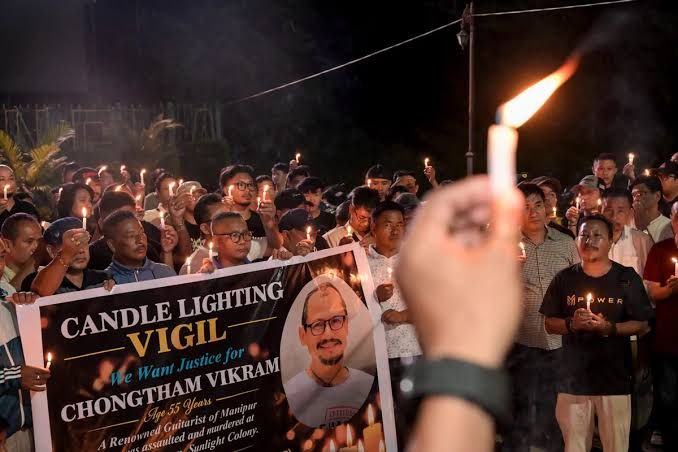
The Fact: A 55-year-old musician from Manipur was beaten to death allegedly by a group of men outside his home in Delhi after he objected to noise late at night. Chongtham Vikram Singh had stepped out of his home in Kilokari, southeast Delhi, around 11.30 pm on September 6 to dispose of garbage when he saw a group of men, including workers from nearby eateries and food-delivery agents, allegedly making noise. He objected, and and argument followed. According to the FIR, Singh was then chased into the staircase of his building and attacked. His 20-year-old son, Yaiphaba, heard his father screaming and, on opening the door, allegedly saw four to five men kicking and hitting him. The attackers fled after the son raised an alarm. CCTV footage shows the alleged attackers leaving the building at around 12.06 am. About 10 minutes later, Singh was carried out by his family and taken to Holy Family Hospital in a taxi. He died during treatment. The hospital report cited haemorrhagic shock caused by blunt-force trauma as the cause of death. The FIR also says Singh told his son, while being taken to hospital, that the men had come from the dhaba outside their building and that some of them had threatened him earlier. Seven accused have been arrested and an eighth person, a juvenile, has been apprehended.
The Context: Singh was a well-known figure in Manipur’s music scene. He was the lead guitarist of Phoenix, one of the prominent rock bands of Manipur in the 1980s. He had earlier played with Ultra Vires and later Eastern Dark, before moving to Delhi and working as a music teacher. His killing has raised a much larger question. Was his identity as a man from the Northeast a factor? There is, as of now, no evidence establishing that racial abuse caused this attack. Singh’s family has not alleged that racial slurs were used, and that distinction matters. But the concern has not emerged from nowhere. In February this year, a female student from the Northeast was subjected to abuse in Delhi’s Malviya Nagar by her neighbours. And in June, The Indian Express reported that Delhi Police data showed 1,465 of the 2,656 FIRs registered over crimes against people from the Northeast between 2014 and April 2026 were classified as “untraced” — nearly 55%.
The Peek Insight: Delhi has always sold itself as a city where ‘outsiders’ can become insiders. People come here from every corner of India to study, to work, to build careers, to make music, to make a life. And yet, for many people from the Northeast, being an Indian in Delhi can still come with the burden of constantly having to explain that they belong here too. And this is something we heard repeatedly during our ground reporting. People told us that Manipur no longer feels safe because the conflict continues there, but now, even the national capital does not feel safe. That is a deeply unsettling reality. The words “Chinese”, “Chinki” and “momo” are not harmless jokes when they are used repeatedly to mark someone as an outsider. A woman being racially abused by neighbours, a student being targeted on the street, or an entire community living with the fear of being singled out because of how they look, this behaviour speaks to a deeper intolerance. And that is why the circumstances of Vikram Singh’s killing deserve scrutiny beyond the immediate question of who assaulted him. The most disturbing part of this story is how little it apparently took for an ordinary neighbourhood disagreement to turn fatal. Singh was a musician, someone whose life was built around creating sound. He had spent decades making music, teaching children and contributing to Manipur’s cultural life. Yet he was allegedly killed after asking others to stop making noise. That contrast is unbearably stark. The larger question now is whether Delhi is becoming a city where differences — ethnic, cultural, linguistic or simply personal — are increasingly met not with coexistence, but with hostility.