Your PEEK Into The Day: 5 Stories That Deserve The Front Page

Peek TV | September 07, 2026
‘Party’ Hard, Politics Hardly?: Gujarat‘s Mysterious Political Cash Trail
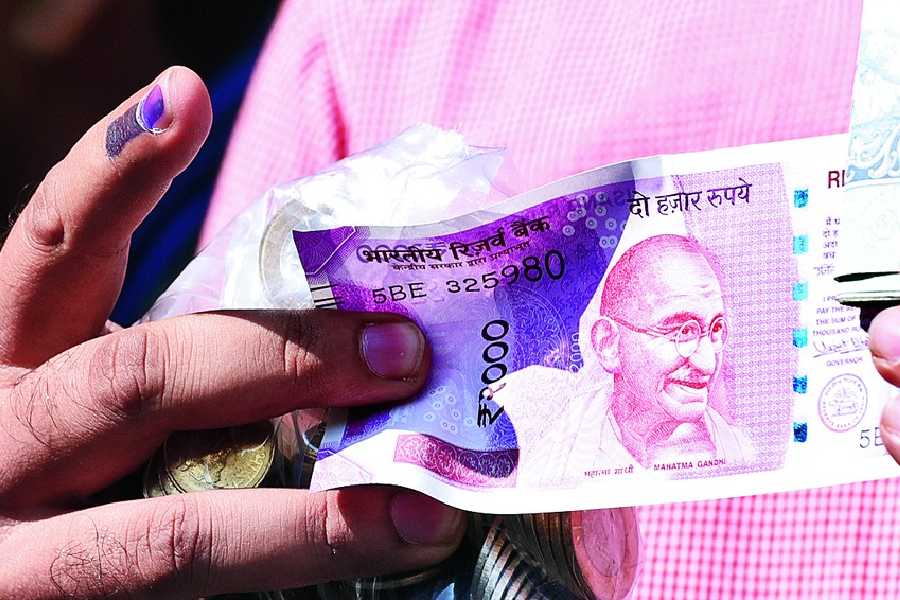
The Fact: An unknown Gujarat-based political party received more than twice as much money as India’s biggest opposition party in 2023–24. The Aam Janmat Party, a Registered Unrecognised Political Party, reported ₹620 crore in donations — compared with ₹281 crore received by the Congress during the same period. And this was a party that fielded just one candidate in the 2024 Lok Sabha election. The BBC investigation has uncovered that six little-known Gujarat-based parties together reported ₹1,700.78 crore in donations in 2023–24 — more than the combined ₹1,480.43 crore received by five national parties, Congress, AAP, BSP, CPI(M) and NPP. Yet these six parties fielded just 15 candidates in the 2024 Lok Sabha election, compared with 893 candidates fielded by those five national parties. And the BBC investigation found some striking political connections. Aam Janmat Party was founded by Anamika Paswan, who is now a BJP vice-president in Bihar. Paswan told the BBC that she had resigned from the party in 2022, before it shifted its base from Patna to Ahmedabad. The BBC also spoke to the president of another of these parties, the New India United Party, who said the party supported the BJP “from their hearts and minds.”
The Context: These parties are RUPPs or Registered Unrecognised Political Parties. These parties are registered with the Election Commission but without recognised national or state-party status. There is nothing inherently suspicious about a small party receiving donations. The question is the scale. What are parties with almost no electoral footprint receiving hundreds of crores? The BBC found that four of the six parties were registered in Ahmedabad’s Naroda area. Several offices were shut, office-bearers were unavailable or unwilling to speak, and in the case of Aam Janmat Party, its treasurer told the BBC that the party had effectively stopped functioning even though its listed bank account could still receive money.
The Peek Insight: India’s political system has created a strange category of parties that can be registered, raise enormous amounts of money and acquire real political significance, without having anything close to the electoral footprint we normally associate with political power. Look at the Nationalist Citizens Party of India, or NCPI. It was virtually unknown to the public. Yet this year, 20 Trinamool Congress MPs announced that they were leaving the TMC and joining the NCPI, aligning themselves with the BJP-led NDA. The BBC’s investigation into the Gujarat parties actually began while looking into that episode. NCPI itself was not part of the BBC’s six-party financial investigation, so there is no basis to suggest that the two stories are financially connected. But the episode demonstrates that an obscure registered party can suddenly become a vehicle through which significant political power is reorganised. Now the BBC investigation does not, by itself, prove that these parties are BJP fronts. But it raises a much more fundamental question about political finance in India. What happens when political parties can exist largely on paper, have minimal electoral activity, raise hundreds of crores and yet have very little public visibility or scrutiny? What happens when an entity that almost nobody has heard of can suddenly become politically relevant? The deeper danger is that political power and political money can become increasingly invisible at precisely the moment when they matter most. And in a democracy, what happens behind the ballot box cannot be allowed to become completely invisible to the voter.
‘Face’ It: Does Delhi Police Have A Recognition Problem?
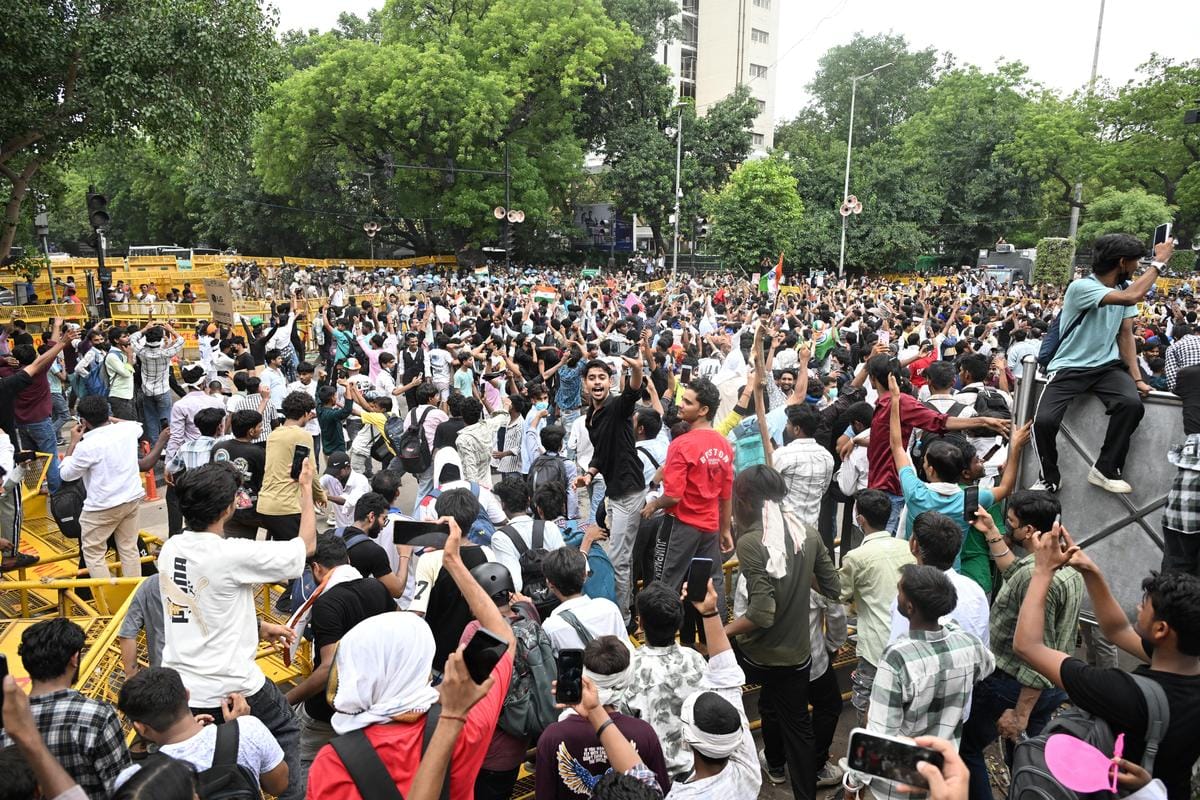
The Fact: An Indian Express investigation has exposed a major problem with Delhi Police’s use of facial recognition at the Jantar Mantar student protests. Delhi Police told the Supreme Court that its Facial Recognition System had identified 2,873 people with alleged criminal antecedents at the protest between July 20 and 26. But when The Indian Express checked police, jail and court records, it found that at least 25 of those people were actually behind bars when the system supposedly spotted them at the protest. The 25 included 17 people facing murder charges, four facing rape charges, including two POCSO cases, and four facing attempted murder charges. One example is Yogesh alias Raju, an alleged aide of gangsters Lawrence Bishnoi and Hashim Baba. The system reportedly identified him at Jantar Mantar on July 25. Jail records show he was in Tihar at the time.
The Context: The facial recognition system was deployed around the student protests that followed the NEET paper leak. Delhi Police later told the Supreme Court that 2,402 people were identified through its biometric database, Crime Kundli, while another 471 were matched through criminal records. But Delhi Police has also said that no action will be taken merely because the facial recognition system produced a match. Officers say each case will require “field verification”. That distinction matters because Delhi Police itself has acknowledged that facial recognition is not proof of identity. An RTI response had shown that the police considered an 80% accuracy rate sufficient for a “positive” match. But lighting, camera angles, image quality, masks and the database being searched can all affect results.
The Peek Insight: This is where the story becomes bigger than one protest. What happens when surveillance technology gets a person wrong, but the consequences are very real? A facial recognition system can flag someone as a potential match. It cannot establish that the person was physically present at a protest, much less that they committed a crime there. The problem becomes even sharper when the system appears to identify people who were physically unable to be at Jantar Mantar because they were in prison. Delhi Police says verification will happen before any action. That safeguard is important. But the investigation shows why it cannot be treated as a formality.
The Great Indian Delete-ocracy: Jharkhand’s Voter Roll Problem
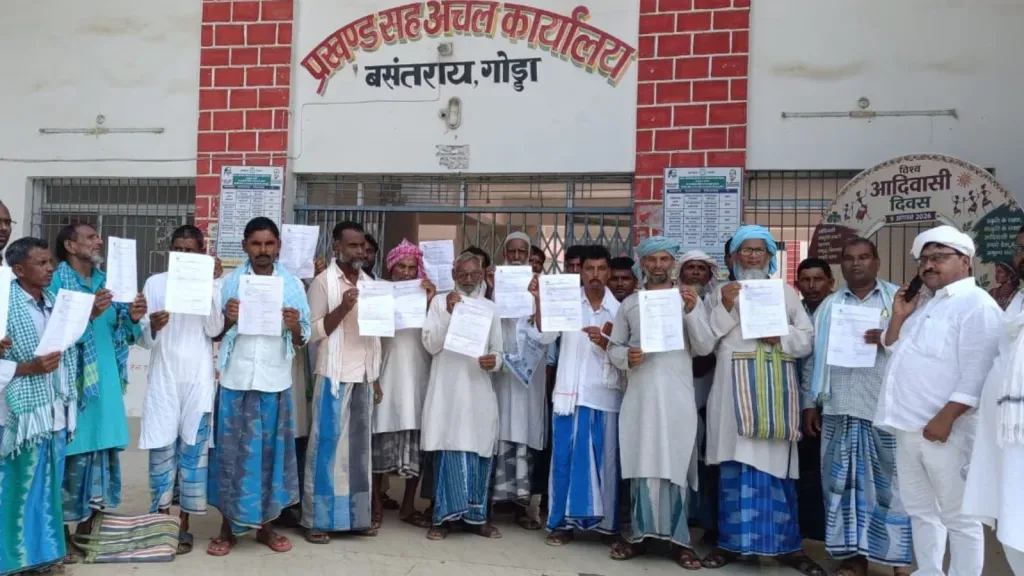
The Fact: Jharkhand’s Special Intensive Revision (SIR) of electoral rolls has triggered a controversy in Godda district over Form 7, which is used to seek deletion of a voter’s name. On August 29, BJP Booth Level Agent (BLA) Vinay Kumar Mandal allegedly submitted around 200 Form 7 applications at Booth No. 231 in Pachrukhi village. The complainant and Booth Level Officer (BLO), Sajida Bibi, said the forms concerned minority voters, including Bibi and her husband there. An FIR was registered on September 3 under Section 31 of the Representation of the People Act and the Bharatiya Nyaya Sanhita. Mandal was arrested and later released on bail. He denied wrongdoing, saying he submitted the forms after being told to do so. He said he understood Form 7 as a way to raise objections that would subsequently be verified. Importantly, the Election Commission says objections can be filed in bulk, but deletions require verification before any voter is removed before voting in Jharkhand elections.
The Context: The controversy comes after an earlier Indian Express investigation found a pattern of bulk Form 7 submissions by BJP Booth Level Agents in Godda during the SIR exercise. At least four Booth Level Officers had raised concerns, with many of the voters named in the applications belonging to the minority community. At one booth, 25 forms were submitted, while another BJP agent brought around 75 forms and later burned them after being questioned by the BLO. The Express also found that several voters targeted for deletion had lived in the area for generations and were present in the 2003 electoral roll. District authorities subsequently ordered an inquiry. The latest incident has brought the issue back into focus. At Booth 231 in Pachrukhi, BJP BLA Vinay Kumar Mandal allegedly submitted around 200 Form 7 applications, including those against the BLO, Sajida Bibi, and her husband. Mandal was arrested after an FIR was filed but was later released on bail
The Peek Insight: The issue is bigger than a dispute between BJP booth agents and local election officials because electoral rolls are the foundation of the voting process. If genuine voters are selectively targeted during a revision exercise, particularly when many names belong to one minority community, it can create a perception of disenfranchisement even before an election. At the same time, the allegations should not be presented as established fact until the official inquiry determines whether the forms were false, improperly prepared or part of a coordinated effort. The international angle is therefore about credibility as much as politics. India presents itself as the world’s largest democracy, and the perception that minorities are being systematically excluded from electoral participation could attract closer scrutiny from foreign media, rights organisations and democratic institutions. Ultimately, the final assessment should depend on evidence, a transparent inquiry and whether affected voters can fairly challenge any proposed deletion.
OGs, Phuphas & Naxals: Welcome To PM Modi’s Classroom
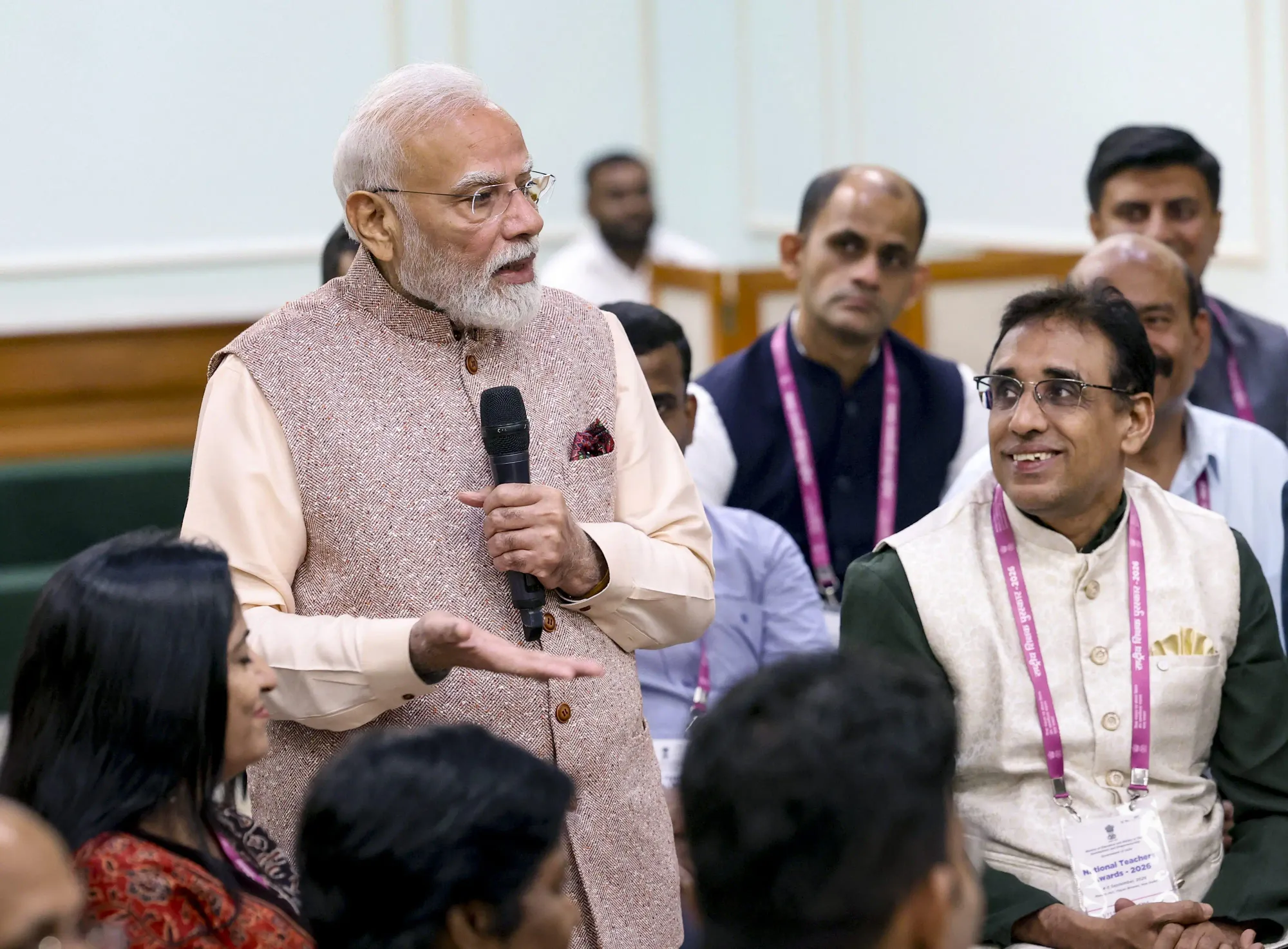
The Fact:Prime Minister Narendra Modi addressed the centenary celebrations of Delhi University’s Shri Ram College of Commerce on September 5th on the occasion of Teachers’ day. He returned to the institution after 13 years, his last visit was marked in 2013 as Gujarat’s Chief Minister. In his address, PM Modi reminisced his 2013 visit along with listing various achievements of his political career. In his speech he categorised the outside world, for the students, to be consisting of two kinds of people: those who convert individual potential to national strength and ‘angry phuphas’-people who question every initiative, whose “favorite job is to oppose every work” with a refrain “what is the need for this?” He further reiterated the term "Dimagi Naxal," previously introduced in his Independence Day address, likening its impact to homeopathic treatment that temporarily aggravates an ailment before curing it. His remarks drew widespread criticism from opposition parties, educators, students, and commentators.
The Context: In past Teachers' Day addresses, PM Modi emphasised core themes of education and appreciation: his 2020 message highlighted how teachers "shape minds and build our nation," suggesting they share "lesser known aspects of our great freedom struggle"; his 2021 remarks centered on ten education-policy topics during an Education Ministry webinar; and his 2024 statement focused on gratitude, offering "hearty congratulations... to all the teachers", while paying tribute to Dr. Radhakrishnan. None of his previous addresses carried a direct political sparring as seen in the 2026 SRCC speech. The forum that was a notable platform to connect with the youth on a larger scale, got narrowed down to political campaign. The connect with the audience was solely based on internet gen-z lingo, including phrases like “OGs” and “Dhurandhar na ho lekin dhoom toh machai hai”, arguably losing the platform’s gravitas.
The Peek Insight: Teachers’ Day has traditionally been a moment for a Prime Minister to talk about education, teachers and the role of young people in building the country. In his own previous Teachers’ Day messages, Modi spoke about teachers shaping young minds, nurturing curiosity, encouraging innovation and building the nation. Manmohan Singh’s 2010 Teachers’ Day address similarly centred on the teaching profession, education and the values teachers pass on to students. But at SRCC this year, the Prime Minister turned a platform ostensibly centred on education into something much closer to a political address.
On Teachers’ Day, at a college, questioning — arguably one of the most fundamental things education is supposed to teach — was being framed as a political pathology. A university is supposed to be a place where students ask ‘Why? Why this policy? Why this decision? What about unemployment? What about paper leaks? What about the quality and cost of education? What about our campuses?’ Those questions are not evidence of being a “Dimagi Naxal” or a “naraaz phupha”. They are the very basis of an educated democracy. And then there is the language. The references to “OGs”, “naraaz phupha” and internet-style cultural shorthand appear designed to make the Prime Minister sound native to the vocabulary of a generation raised on reels, memes and algorithms. India is an exceptionally young country, and Gen Z is now an increasingly important political constituency. The BJP has invested heavily in communicating directly with younger voters, and Modi remains one of the country’s most sophisticated political communicators. But the SRCC speech raises a question. Is the party actually trying to understand what young Indians are worried about, or is it trying to make itself sound young. Because young Indians may understand “OG”, “phupha” and meme culture perfectly well. But that does not mean their political concerns are memes. They want jobs. They worry about examinations and paper leaks. They care about the cost and quality of education. They have questions about campus freedoms, opportunity and their future. And, crucially, they have questions for their political leaders.
A City Built On Ticking Bombs: Delhi Must No Longer Call Itself A Student Hub
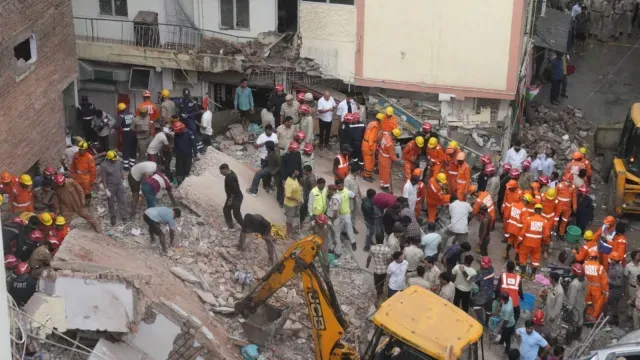
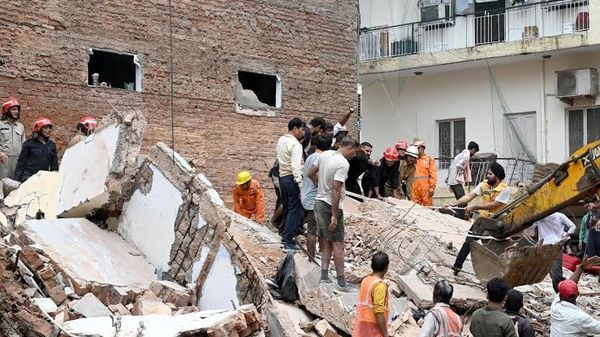
The Fact: A five-storey building operating as a private student hostel Hostel Daze collapsed in South West Delhi’s Satya Niketan near Delhi University’s South Campus, killing at least five people and injuring several others on Sunday. Reportedly, it is being said that unmonitored excavation and renovation work in the building’s basement compromised a main pillar, leading to the catastrophic collapse. As rescue agencies navigated the debris manually to prevent endangering survivors trapped underneath, Delhi Police registered an FIR against property owner Anand Bansal, highlighting a recurring pattern of unregulated structural alterations in student housing zones.
The Context: This tragedy reflects an alarming, systemic disregard for student safety across India's urban and educational hubs, where young scholars are routinely housed in hazardous, overcrowded structures. This vulnerability has been underscored by multiple fatal disasters in recent months. Most notably, on June 22, 2026, a massive fire engulfed a commercial building in Lucknow’s Aliganj area, killing 15 people, mostly students and youngsters trapped on the second floor of a graphics animation centre. Additionally, Satya Niketan itself witnessed a fatal terrace collapse in 2022 that claimed two lives during renovation work.
The Peek Insight: What happened in Satya Niketan is not simply a story about one building, one landlord or one compromised pillar. It is a story about what happens when basic urban regulation fails, and students end up paying the price. Delhi has seen this pattern before. In July 2024, three UPSC aspirants died after a basement being illegally used as a library in Old Rajinder Nagar was flooded.
Then came another building collapse in Delhi, where students were reportedly having dinner when a structure came crashing down. And now, at Satya Niketan, a five-storey student hostel has collapsed, killing at least five people, with preliminary reports pointing to excavation and renovation work in the basement compromising a structural pillar.
Different buildings, different circumstances, but the same underlying questionz. Where was the regulator before people died? And that question becomes particularly uncomfortable for the Municipal Corporation of Delhi. The MCD is now under a triple-engine government, with the BJP controlling the Centre, Delhi and the municipal corporation. That alignment was supposed to make coordination and governance easier. But when buildings collapse, illegal structures operate and basic safety norms are allegedly ignored, there is nowhere convenient to pass the buck. Fire safety, building permissions, structural alterations, basements, commercial conversions and occupancy norms are not obscure technicalities. They are precisely the regulations designed to prevent a student hostel from becoming a death trap. And Delhi’s recent record makes the failures harder to dismiss as isolated accidents. Perhaps the most revealing irony is that the MCD commissioner, Ashwani Kumar, became nationally infamous after reports that a major stadium had been closed so that he could walk his dog. Yet the far more consequential question for the city’s residents is whether the civic administration is capable of ensuring that the buildings in which Delhi’s young people sleep, study and eat are actually safe.
And finally,
Indian news needs a new mainstream
We’ve all seen it enough: TV debates chasing noise, newspapers weighed down with complexity, and social media flooded with misinformation. But none of that means you should be left confused, misled, or disconnected from the truth.
Join us in building a space where clarity cuts through chaos, and the truth comes above all numbers!
Thank you for reading,
Team Peek TV