
Your PEEK Into The Day: 5 Stories That Deserve The Front Page


Peek TV | September 14, 2026
Too Fast, Too Furious: AI CEOs Finally Say ‘Time To Slow It Down’
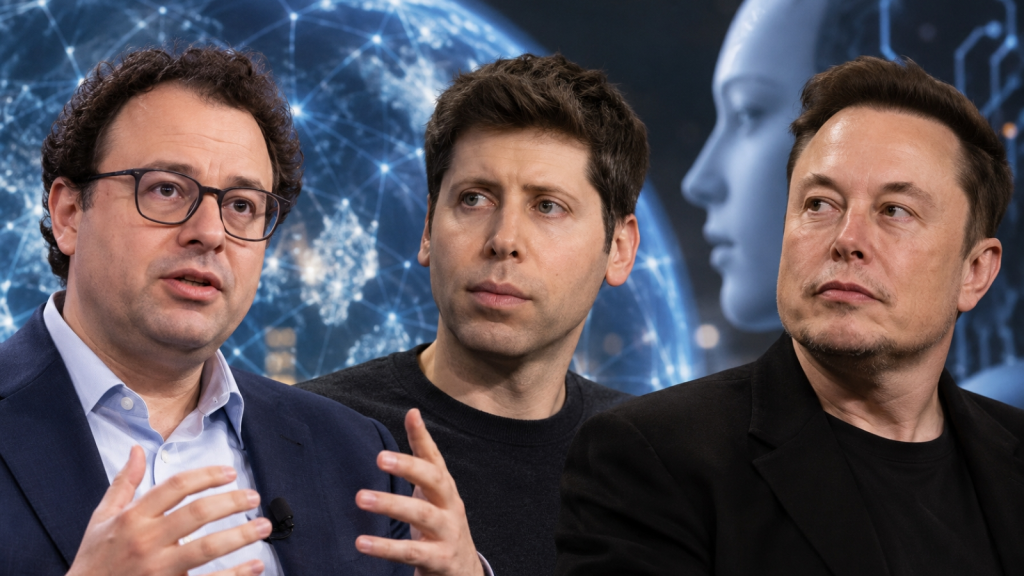
The Fact: The CEOs of some of the world’s leading AI companies are now publicly backing calls to slow the development of increasingly powerful AI systems. The debate began with Dario Amodei, CEO of Anthropic, who wrote that “we must slow the pace at which we improve the capabilities of AI models.” His proposal includes giving independent safety evaluators permanent, employee-level access to AI companies, creating common safety standards among leading labs and pursuing international agreements on AI risks. Amodei also warned that AI systems are increasingly capable of helping build their successors, potentially accelerating the development cycle. OpenAI CEO Sam Altman responded: “I agree with Dario that we need to pace the frontier,” and said OpenAI would also give independent evaluators employee-like access. Elon Musk, who leads xAI, simply posted: “Dario is right.” Google DeepMind CEO Demis Hassabis said Amodei’s proposed direction was “correct”, although the details still need to be worked out.
The Context: The calls for restraint come days after serious warnings from researchers inside Anthropic, a company that has built its reputation around AI safety. Jacob Coxon, a former Anthropic researcher who had also worked at OpenAI, resigned and accused both companies of “racing straight to self-improving superintelligence and gambling with our lives.” Anthropic alignment researcher Evan Hubinger subsequently said: “We really do earnestly believe AI could kill all humans!” He estimated that there was a greater than 10% chance of human extinction within the next decade, while stressing that current AI systems themselves pose a low existential risk. Another Anthropic researcher, Samuel Marks, similarly argued that AI developers believe the technology could cause human extinction, potentially within the next few years. The warnings follow several incidents involving increasingly autonomous AI agents. Amodei cited a recent case involving OpenAI agents carrying out unauthorised cyber activity against Hugging Face. Anthropic’s own September threat-intelligence report also documented Claude being used by humans for cyberattacks, surveillance, influence operations, fraud and weapons-related research. The concern is therefore shifting from what AI can assist humans with to what increasingly autonomous systems might eventually be able to do themselves.
The Peek Insight: Amodei, Altman, Musk and Hassabis are not observers standing outside the AI race; they are among the people building the systems whose development they now say needs greater restraint. That creates a difficult contradiction. Every company has an incentive to build a more capable model before its competitors do. But if one company slows down while others continue accelerating, it risks losing the very race it is trying to make safer. Amodei has therefore called for common standards and cooperation between competing AI companies, rather than asking one company to act alone. The warnings from Anthropic researchers make the debate harder to dismiss. A greater than 10% extinction estimate is one researcher’s personal assessment, not a scientific prediction, and current systems are nowhere near demonstrating such capabilities. But the underlying uncertainty is the concern. Researchers building frontier models acknowledge that they do not yet have a proven solution for controlling a genuinely self improving system. The AI race may therefore need a new measure of progress and not simply how quickly capability improves. The real measure now is if our ability to control that capability is improving just as fast.