Your PEEK Into The Day: 5 Stories That Deserve The Front Page

Peek TV | August 31, 2026
Nepal Floods Death Toll Crosses 750 as Search Continues for Nearly 2,500 Missing
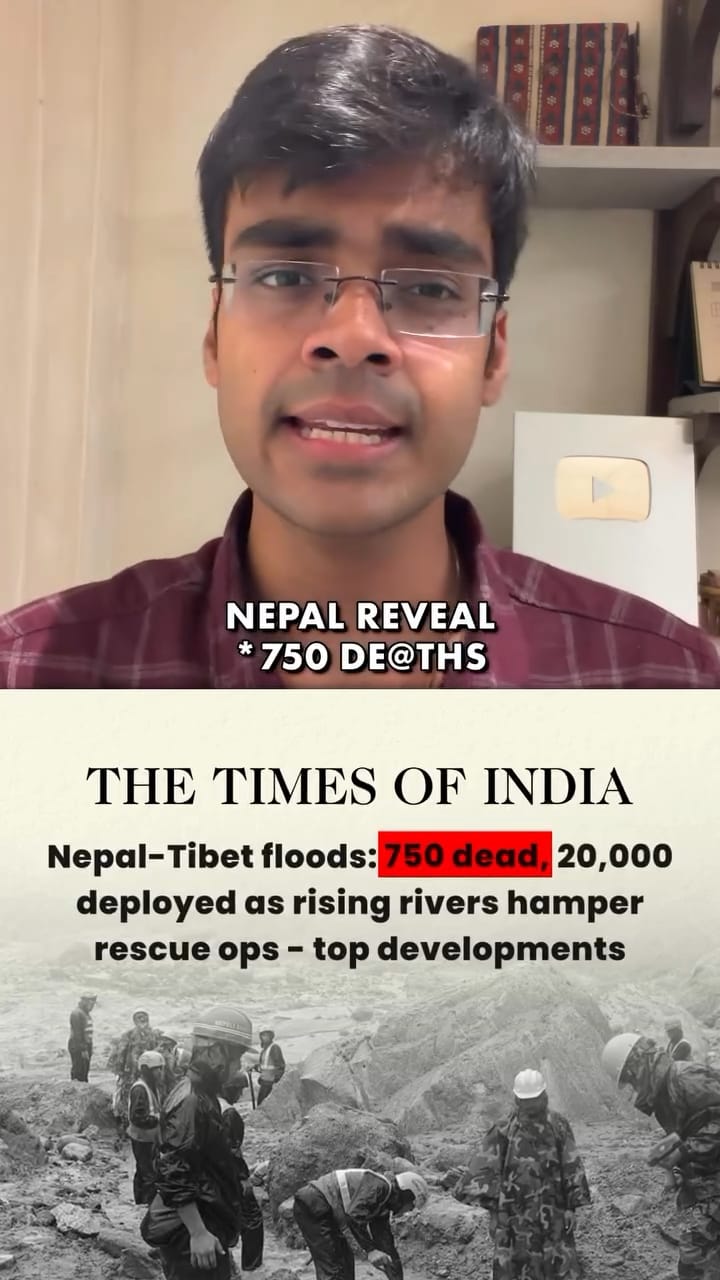
The Fact: After a catastrophic flash flood struck the Nepal-China border region on Wednesday, at least 752 people have lost their lives while more than 2,500 are reported missing. A glacial collapse sent rock, ice and mud thousands of feet down into the valley below, washing away the Rasuwagadhi border crossing, Trishuli River infrastructure and damaging 14 hydropower projects. Nepal's National Disaster Risk Reduction and Management Authority says over 8,000 people have been rescued and 242 are injured, with more than 18,700 rescuers deployed nationwide. China had briefly suspended rescue efforts at the border due to the risk of a second flood, but operations have now resumed.
The Context: Nepal is home to thousands of glaciers which are melting and destabilizing as temperatures rise. Nepal and China had maintained a flash-flood early warning system for years, credited with preventing past casualties, but it wasn't built to detect this kind of disaster. Experts say this specific area hadn't been closely watched by geologists before, and that's part of why the warning systems failed. Nepal, almost every year, faces immense damage to its infrastructure, agriculture, and human life, but this year's losses will take years to rebuild. Nepal's Finance Minister Swarnim Wagle told Reuters that the country might need $5 billion to rebuild this flood's losses; this amount is equal to nearly one tenth of the country's GDP.
The Peek Insight: Nepal states it is a victim of a climate crisis that it did not cause, with Nepal’s Carbon Dioxide emission rate accounting for a microscopic 0.027% to 0.04% of total global emissions. In the wake of this catastrophe, Nepali officials again highlighted this imbalance, arguing that the floods demonstrate how vulnerable populations, particularly Himalayan communities, suffer the brunt of a shifting climate despite contributing virtually nothing to it. They urged a unified international response instead of relying on solitary national adaptation initiatives. Meanwhile, experts emphasized a critical structural flaw: current early-warning networks, designed around familiar flooding behavior, could not anticipate this event because they were never meant to monitor glacial collapse. Consequently, unless targeted investments are made to track unstable high-altitude glaciers, similar undetected crises are bound to repeat as global warming progresses.
Cardiac Arrest or Cover-Up? Dalit Man’s Death in UP Police Custody Sparks Murder Case Against His Own Cousin
The Fact: A 28-year-old man, Rajesh, died on Friday after collapsing at the Dataganj police station in UP's Badaun district, a day after being brought in for questioning following a clash between two groups at a community feast in Atsena village. Police say he was booked for breach of peace after the clash, which broke out over loud DJ music at a temple gathering. According to SSP Ankita Sharma, CCTV footage showed Rajesh lying on the floor, then sitting up and walking to the washroom around 4 pm, after which he collapsed. He was rushed to a nearby hospital and later to the Badaun district hospital, where he died during treatment. The post-mortem cited cardiac arrest as the cause of death, with no injury marks found on the body, and Sharma said the CCTV “makes it clear that there was no assault or torture.” A day later, on the basis of a complaint from Rajesh’s brother, police filed a murder case against his maternal cousin, Raghuveer, alleging a dispute between the two was connected to Rajesh’s death.
The Context: Rajesh’s family disputes the official account and has alleged he was assaulted or tortured while in custody, though the SSP said no information from the family or any other source has emerged to support that claim. This is where the story splits into two competing narratives: police point to CCTV, medical records and the post-mortem as clear evidence of a natural cardiac event, while the family’s allegations remain unresolved pending a promised inquiry. Congress' media head Pawan Khera posted on X that Rajesh, a Dalit man, was “picked up by Yogi’s police” and later died in custody, linking the incident to what he called a “larger reality” of continuing discrimination and violence against Dalits in India. This is a familiar pattern: custodial deaths involving Dalit men have repeatedly triggered near-identical disputes between family allegations of assault and police citing CCTV or post-mortem findings of no external injury, as seen in past cases in Madhya Pradesh, Karnataka and Haryana.
The Peek Insight: This tension, between a forensic account backed by CCTV and post-mortem findings, and a grieving family’s suspicion of that same account, is exactly the pattern that recurs across custodial death cases in India, largely because police control most of the evidence used to clear themselves, which fuels public distrust even when the medical findings may be accurate. The incident also points to the broader issue of custodial torture and deaths in India. According to the National Human Rights Commission (NHRC), India recorded 160 deaths in police custody in 2023–24. Whatever the inquiry concludes, the political dimension is unlikely to fade quickly, since opposition parties have historically used such cases to sustain a broader argument about how UP’s police treat Dalit citizens, making the promised “impartial inquiry” as much a test of institutional credibility as it is a search for what actually happened to Rajesh.
True Hindutva Means Unity, Not Exclusion: RSS Chief Mohan Bhagwat's 'Doublespeak' in New York
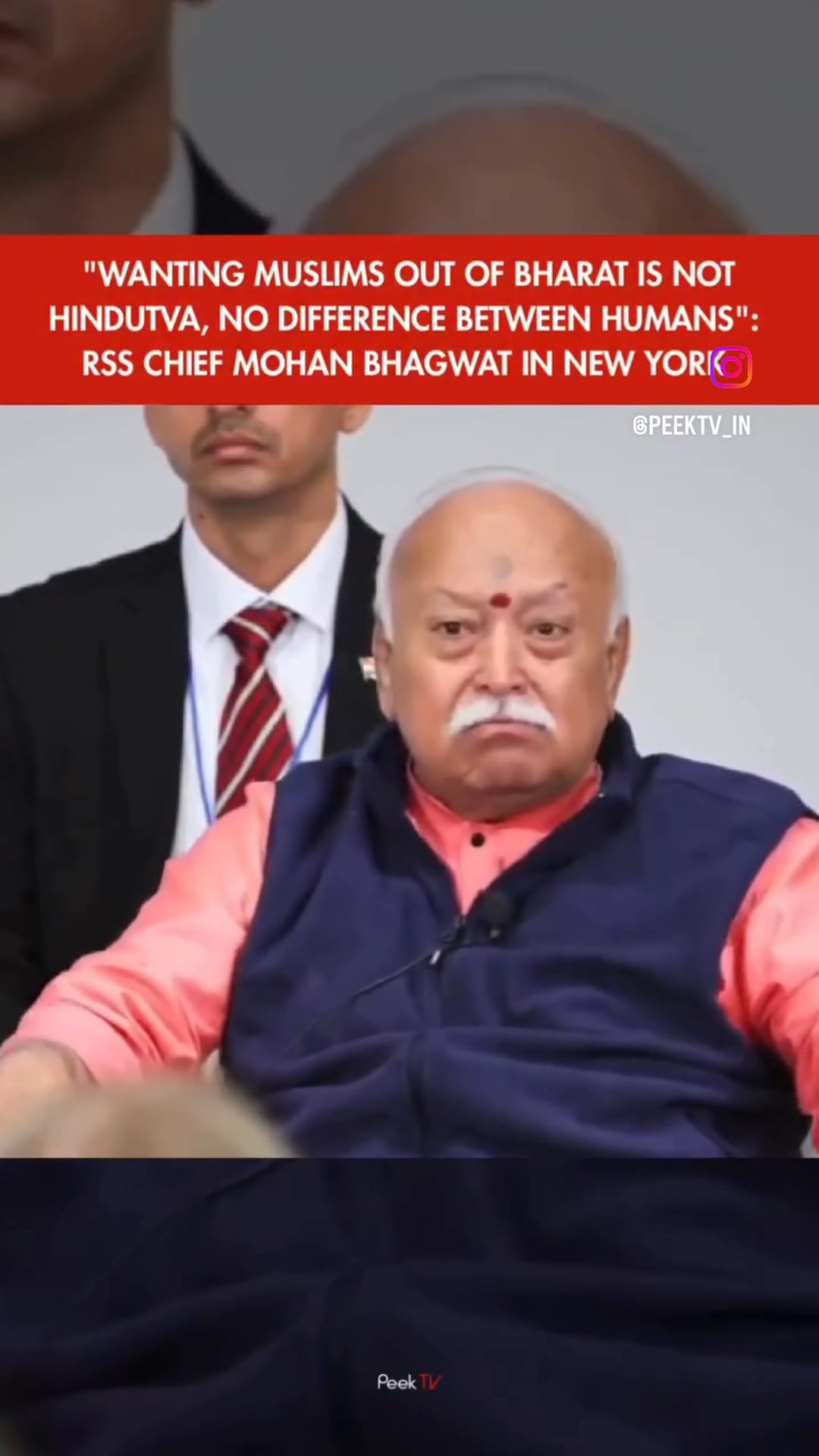
The Fact: Rashtriya Swayamsevak Sangh (RSS) chief Mohan Bhagwat addressed an international audience at the "One World, One Humanity" faith leaders' conference in New York City, asserting that true Hindutva embraces pluralism and coexistence. Emphasizing India's inclusive civilisational framework, Bhagwat explicitly stated, "If any Hindu thinks that there should be no Muslim in Bharat, he will not remain Hindu. If you want to call yourself Hindu, you must believe that all paths are leading to the same goal and that every human has dignity. There is no difference between human beings." He noted that the RSS engages in extensive community dialogue and service projects without religious discrimination. However, this inclusive global messaging stands in stark contrast to domestic ground realities, where RSS members are often behind incidents of violence against Muslims, and polarizing statements are made by several party leaders, including Prime Minister Narendra Modi, during intense electoral campaigns.
The Context: Bhagwat’s conciliatory statements abroad arrive amidst severe international scrutiny and domestic polarization. The international scrutiny was highlighted yet again during Bhagwat's event by protests outside Madison Square Garden organized by groups like the Indian American Muslim Council, alongside calls for sanctions from American religious freedom panels. While top ideological leadership actively promotes a sanitized, pluralistic rebranding of Hindutva for global diaspora audiences, domestic politics often relies on majoritarian mobilization. While executive leadership occasionally champions slogans of development for all, past election rallies have frequently featured loaded language targeting minority populations, with even the Prime Minister referring to all Muslims as "infiltrators" in a speech before the 2024 elections. This creates a persistent disconnect between moderated overseas optics and the hardline domestic socio-political reality experienced by minority groups on the ground.
The Peek Insight: This glaring dichotomy exposes a strategic dualism in majoritarian politics, where international platforms are utilized to project tolerance and deflect global criticism, while domestic messaging frequently exploits identity divisions for electoral consolidation and secularism. This tension is starkly underlined by domestic rhetoric from top leadership, such as Prime Minister Narendra Modi warning during a 2024 election rally that the opposition would gather public wealth and distribute it "to those who have more children... to the infiltrators [ghuspaithiyon]", alongside incendiary remarks from party figures like MLA Nitesh Rane threatening to "enter your mosques and attack you." Appeals made at international platforms ring hollow for marginalized communities at home who face persistent hate speech and institutional impunity. Ultimately, these moderate pronouncements by ideological chiefs carry little credibility unless matched by a sincere, structural commitment from the political executive to curb sectarian animosity and violence, along with checking hate speech from party ranks.
Netas Are Offended By A New Samay Raina Joke, But Do They Speak Up About The Issue Behind The Laughs?
The Fact: Samay Raina’s “India’s Got Latent 2” is back in the spotlight after a roast exchange with Sharon Verma sparked backlash over remarks linked to Bihar, Kashmir, and Kashmiri Pandits. In the clip, Raina took a dig at Verma’s Bihari roots and migration stereotypes, while Verma replied with a joke on Raina’s Kashmiri identity and “getting stoned,” followed by the line that she had “at least left her state by choice.” The exchange quickly went viral and drew sharp reactions from political leaders. Shiv Sena (UBT) leader Anand Dubey said, “Just stick to comedy. Why drag specific castes, states, or religions into it?” Bihar education minister Mithilesh Tiwari called the remarks “intolerable,” while BJP MLA Ram Kadam demanded stricter action against such content.
The Context: Kashmir has carried political and emotional weight for decades because of militancy, displacement, and the mass exodus of Kashmiri Pandits in the early 1990s. That history has kept the issue alive in public discourse, and references to the region still trigger immediate responses from political leaders and social media alike. In recent years, Kashmiri Pandit groups have continued to raise concerns over threats, displacement, and their unresolved grievances, failing to draw much public and political attention.
The Peek Insight: As recently as July this year, a protest was carried out by the Kashmiri Samaj (YAIKS) over the BJP's unfulfilled promises regarding displaced Kashmiri Pandits in Jammu. Several groups have also staged protests in recent years over threats from militant groups; one such protest happened in 2022 outside the BJP's office in Jammu. Such protests rarely draw comments from the political leaders now making jokes about the community a controversy. The intense political uproar over a comedy roast highlights a hypocrisy in public leadership - they maintain strategic silence or deflect accountability when actual crises unfold, but are quick to pick on commentary and jokes that have little to no consequence on the ground.
Resisting The Bell: How Student Protests Are Rewriting Education Rules Across India
The Fact: The wave of campus agitations across India intensified significantly this week with students at the Indian Institute of Science Education and Research (IISER) Pune launching an indefinite sit-in protest on August 27, 2026. Entering its fourth consecutive day, the protest was triggered by the suspension of Student Council general secretary Raj Bagwe and intensified by the tragic death of a female student under unclarified circumstances. Students are demanding a complete rollback of recently introduced gender based segregation, an urgent overhaul of mental health infrastructure, academic relaxations, and protection against disciplinary retaliation. Meanwhile, protests and a mass boycott of classes at IIT Delhi continue following the suicide of an MSc Physics student.
The Context: Over the past month, at least six premier higher education institutions, including IIT Delhi, Jamia Millia Islamia, NALSAR University of Law, NLSIU Bengaluru, Mohammad Ali Jauhar University, and IISER Pune have faced some form of student protests and administrative standoffs. These agitations were ignited by diverse friction points, ranging from contested convocation Chief Guests and spot admission irregularities to administrative overreach and severe mental health crises. This groundswell is a rare wave of simultaneous unrest erupting across elite institutions that have historically remained quiet, weeks after the Cockroach Janta Party's Jantar Mantar protest succeeded in securing the Education Minister's resignation.
The Peek Insight: These widespread demonstrations represent a long-overdue venting of systemic grievances that have festered quietly inside few of India's most prestigious academic institutions for decades. Issues like severe academic burnout, inadequate counseling infrastructure, arbitrary disciplinary actions, and gender based curbs have long been brushed under the rug by administration boards. However, recent protest successes, such as NALSAR students successfully forcing the Bar Council of India to back down on its order barring protesting students from enrolling as advocates, have been followed by a new wave of campus solidarity. From 'Gen Alpha' protests at government schools in small villages and towns across India to students across elite universities staging never-seen-before demonstrations, the success of some protests seems to have opened the pressure cookers students across India were tolerating for years in silence.
And finally,
Indian news needs a new mainstream
We’ve all seen it enough: TV debates chasing noise, newspapers weighed down with complexity, and social media flooded with misinformation. But none of that means you should be left confused, misled, or disconnected from the truth.
Join us in building a space where clarity cuts through chaos, and the truth comes above all numbers!
Thank you for reading,
Team Peek TV