Your PEEK Into The Day: 5 Stories That Deserve The Front Page

Peek TV | October 13, 2026
INDIA Marches On: Rahul Mounts Biggest Offensive Against CEC Yet INDIA Bloc Rally
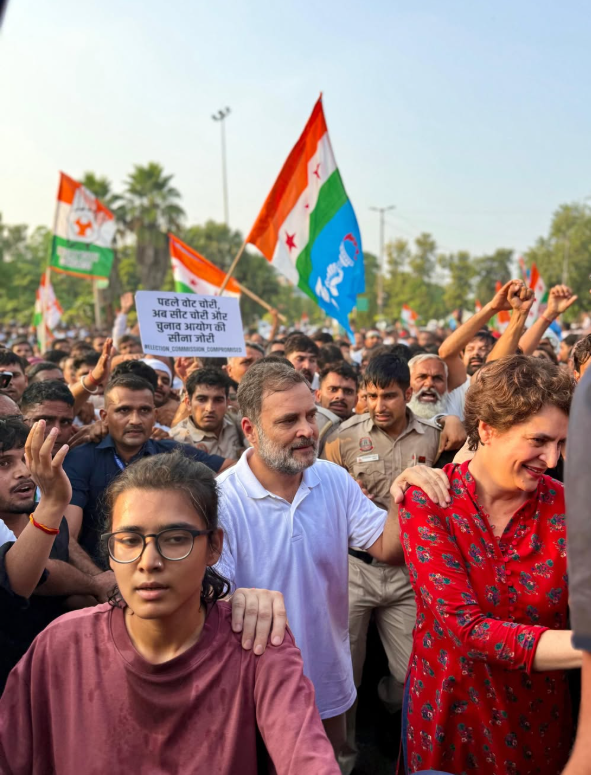
The Fact: On Monday, Delhi witnessed the biggest mobilisation yet against Chief Election Commissioner Gyanesh Kumar, as the INDIA bloc, led by Leader of Opposition Rahul Gandhi, marched towards the Supreme Court demanding his resignation. The march, titled ‘Chalo Delhi’, saw the participation of senior Opposition leaders, including Congress president Mallikarjun Kharge, Samajwadi Party chief Akhilesh Yadav and AISA national president Neha Bora. Later in the day, Gandhi and other Opposition leaders filed a joint petition in the Supreme Court challenging the Special Intensive Revision (SIR) process. The plea sought an independent committee to examine the SIR and the Election Commission’s decision-making process, along with a review of online voter registration and the ECINet portal. The capital witnessed heightened security, with six metro stations, including Rajiv Chowk, shut. Last week, the INDIA bloc had also sought a meeting with President Droupadi Murmu, but the outreach failed to yield a satisfactory outcome.
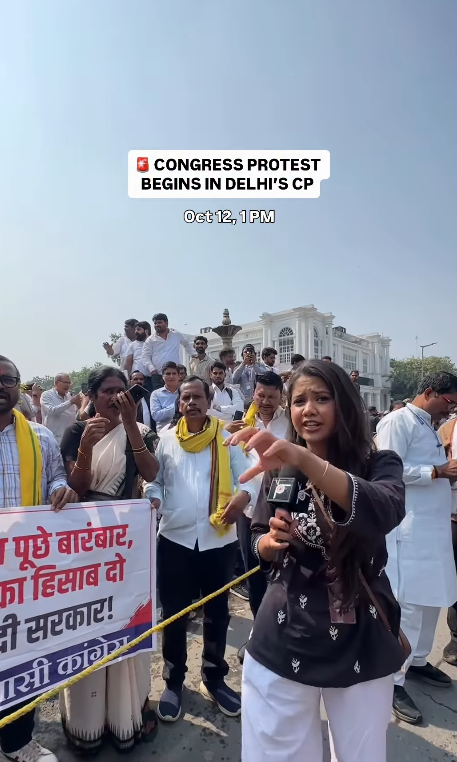
The Context: A day earlier, Chief Justice of India Surya Kant had declined to meet Opposition leaders, saying the matters they were likely to raise were already sub judice before the Supreme Court. On Monday, as the march continued, the CJI reiterated that the court could not intervene in matters of governance, stating, “This is a matter of law and order; it does not pertain to my domain.” He, however, assured that the doors of the Supreme Court remained open to everyone. The Opposition’s march came after flash protests across central Delhi. Around 7,000 people were reportedly detained, including Neha Bora, YouTuber Dhruv Rathee and conveners of the Cockroach Janta Party (CJP). The CJP conveners were placed under preventive detention and released 24 hours later after reportedly signing a surety bond of ₹50,000, though the party’s leadership disputed these claims.
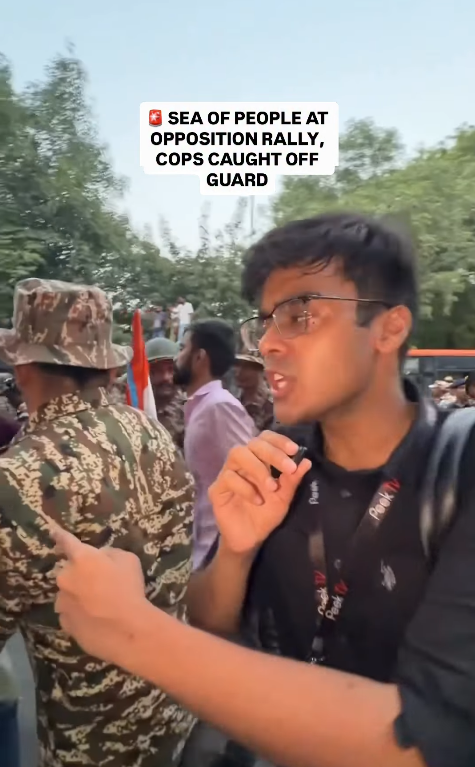
The Peek Insight: Monday’s march offered a glimpse of what Opposition unity can look like when parties set aside their differences over a common demand. The visual of Neha Bora walking hand in hand with the Gandhis was particularly striking. But the day also underlined a larger point: this is the Opposition’s fight, and its ability to mobilise on the streets will be central to how it unfolds. Student groups and other protesters were swiftly detained, demonstrating how quickly the authorities moved to contain dissent. Yet the Opposition managed to mobilise leaders and supporters, take its protest to the heart of the capital and confront the Delhi Police’s restrictions. That mobilisation matters in a political climate where street protests can be curtailed before they gather momentum. The question now is whether the Opposition can sustain this pressure beyond a single demonstration. At the same time, the CJP and the Aam Aadmi Party (AAP) were absent from the INDIA bloc’s march, despite campaigning around overlapping demands. Their absence suggests that a shared cause has not automatically translated into a shared platform. The visual unity of Monday’s protest, therefore, must be weighed against the political divisions that remain. The Election Commission, meanwhile, faces questions that cannot be answered by dismissing protests as political theatre.
Dissent-ination Unknown: Jantar Mantar Off The Map, Protest Still On The Streets
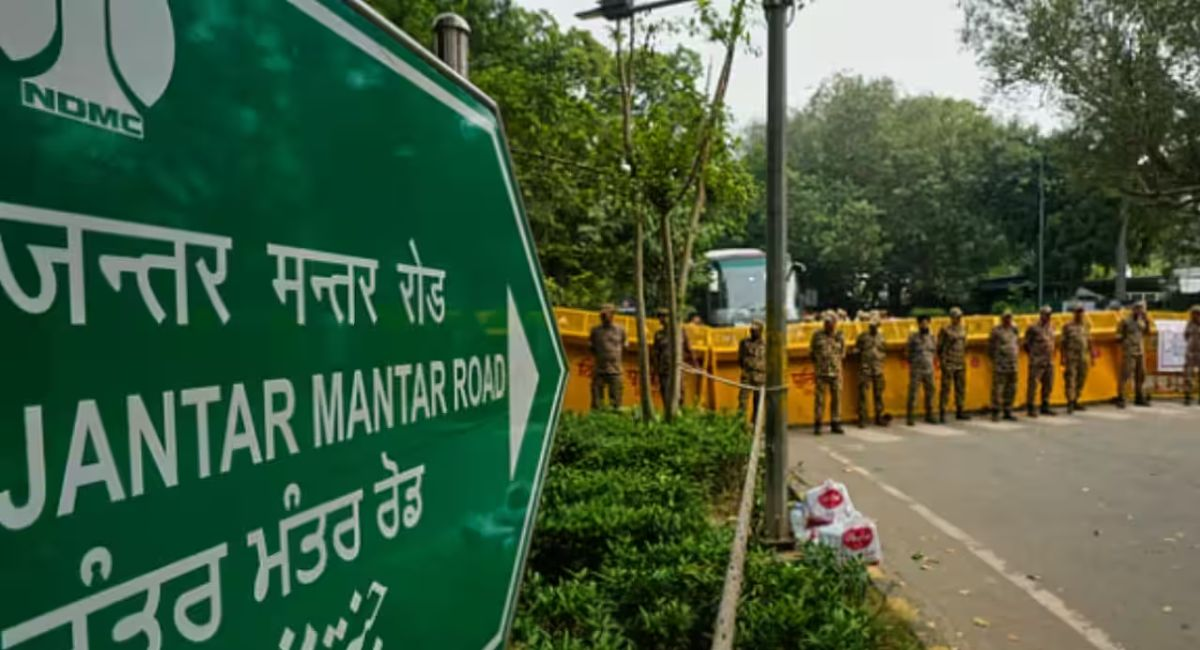
The Fact: Delhi Police has removed Jantar Mantar from its list of designated protest venues, naming Ramlila Maidan, CBD Ground in East Delhi and Burari Ground as alternatives. The decision comes amid protests led by the Cockroach Janta Party (CJP), which has demanded Chief Election Commissioner Gyanesh Kumar’s resignation over alleged irregularities in the revision of electoral rolls.The three new venues are approximately 3 km, 12 km and 21 km from Jantar Mantar, respectively. The move follows recommendations by a Ministry of Home Affairs committee tasked with identifying alternative venues for protests and demonstrations.
The Context: CJP convenor Saurav Das condemned the decision as “unacceptable”, asking, “Why is Narendra Modi scared of Jantar Mantar?” He questioned whether the Ministry of Home Affairs had consulted citizens, stakeholders, or protest organisations before denotifying the site. Das asserted that “The Jantar Mantar belongs to THE PEOPLE OF INDIA.” He described the move as “an assault on people’s fundamental right to protest and peaceful assembly”, declaring, “Ab poora desh Jantar Mantar ban raha he!” Jantar Mantar is more than a location on Delhi’s map. Its transformation into a prominent protest site began in 1993, after restrictions were imposed on demonstrations at the Boat Club lawns near Parliament. Since then, it has hosted movements that brought public grievances into the national political conversation. From Anna Hazare’s anti-corruption movement in 2011 to the wrestlers’ protest in 2023, Jantar Mantar has served as a space where citizens could gather, challenge those in power, and demand accountability. The anti-CAA protests and demonstrations by various workers’ groups also made the site an important centre of dissent. In 2018, the Supreme Court rejected a blanket ban on protests at Jantar Mantar and the Boat Club area, while allowing reasonable regulation of demonstrations. For activists, the location itself matters. Jantar Mantar sits in central Delhi, close to Parliament and key government offices. This proximity gives demonstrations visibility and places public demands within reach of the institutions they seek to hold accountable. Moving protests to the outskirts can make participation more difficult, particularly for people travelling from other parts of Delhi or from outside the capital.
The Peek Insight: A protest site is not simply a piece of land. Its proximity to Parliament, government offices and the public makes it part of the political message. Moving demonstrations away from the capital’s centre may change not just where people gather, but also how visible their demands become. The government has the authority to regulate public gatherings. But the question is whether the new arrangement preserves meaningful access to peaceful protest or makes dissent harder to organise and harder to see. The bigger question remains: why has a demand for accountability from Chief Election Commissioner Gyanesh Kumar led to such sweeping police response and chaos? The scale of the crackdown risks creating the perception that the government is shielding the CEC, deepening public distrust amid the very allegations that triggered the protests. When a historic space like Jantar Mantar loses its place as a centre of dissent, where will people go to make their voices heard? This is more than a change of venue. It risks becoming another blow to the freedoms that define India as a democracy.