Your PEEK Into The Day: 5 Stories That Deserve The Front Page

Peek TV | October 17, 2026
‘Flagged’ For Protest, Detained For Dissent
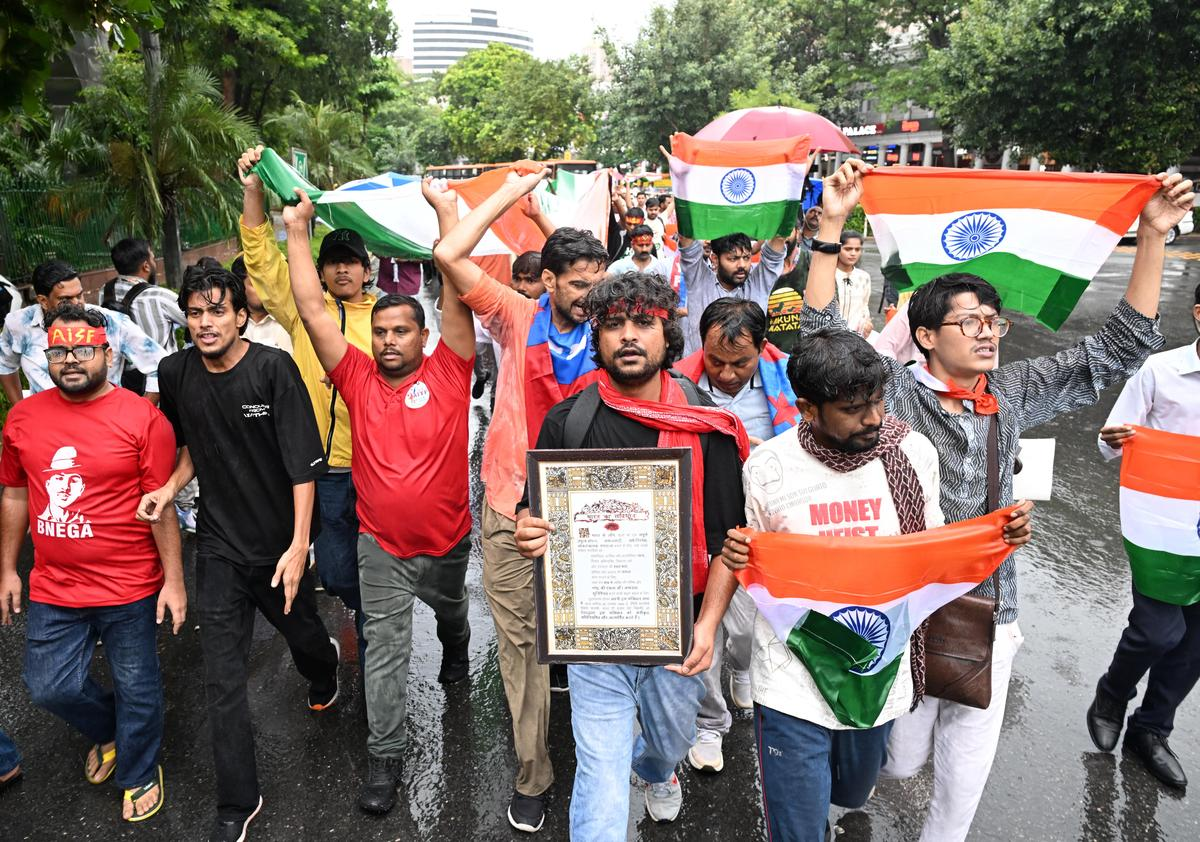
The Fact: The CJP’s Lehra Do Tiranga march at Connaught Place on Friday was stopped before it could begin. Delhi Police detained CJP founder Abhijeet Dipke, AISA president Neha Bora, and at least 150 others across Connaught Place, Mandi House and Janpath. More than 6,000 Delhi Police personnel and 220 companies of the Central Armed Police Forces were deployed, with another 5,000 personnel kept in reserve, taking the total security presence to nearly 25,000. Central Park was shut, its gates chained, and around 40 CCTV cameras installed. Prohibitory orders banning gatherings were also in force. Yet, despite the detention of key movement leaders, people still came out onto the streets carrying the Tricolour. With the leadership behind bars, ordinary citizens took the initiative, turning the march into a powerful moment of collective participation, despite the relatively low turnout. Das and Ashutosh Ranka continue to remain in Tihar Jail, making the question of the authorities’ response to the movement all the more significant.
The Context: The government’s response raises a fundamental question of proportionality. When does maintaining public order become an attempt to prevent public dissent altogether? CJP had called on people to carry the national flag and participate in a peaceful march. In the absence of clear evidence that the gathering posed a serious threat of violence, the scale of the response — extensive security deployment, the closure of Central Park, barricading, surveillance and the pre-emptive detention of leaders — appears difficult to reconcile with the stated nature of the protest. The most striking aspect, however, was that people continued to take to the streets with the Tricolour even after prominent movement leaders had been detained. The sight of ordinary citizens taking the lead in the absence of their leadership was a reminder that democratic participation does not depend solely on those who organise or represent a movement. The continued incarceration of Das and Ashutosh Ranka in Tihar adds another important dimension to the episode — the question is not merely whether a particular march was permitted, but how far the state can go in restricting a movement and detaining those associated with it. The right to peaceful protest is an essential feature of a functioning democracy. The police have a legitimate responsibility to prevent violence and protect public safety but restrictions must be grounded in credible assessments of risk, necessary to address the threat, and proportionate to it.
The Peek Insight: The government’s response raises a fundamental question of proportionality. When does maintaining public order become an attempt to prevent public dissent altogether? CJP had called on people to carry the national flag and participate in a peaceful march. In the absence of clear evidence that the gathering posed a serious threat of violence, the scale of the response — extensive security deployment, the closure of Central Park, barricading, surveillance and the pre-emptive detention of leaders — appears difficult to reconcile with the stated nature of the protest. The most striking aspect, however, was that people continued to take to the streets with the Tricolour even after prominent movement leaders had been detained. The sight of ordinary citizens taking the lead in the absence of their leadership was a reminder that democratic participation does not depend solely on those who organise or represent a movement. The continued incarceration of Das and Ashutosh Ranka in Tihar adds another important dimension to the episode — the question is not merely whether a particular march was permitted, but how far the state can go in restricting a movement and detaining those associated with it. The right to peaceful protest is an essential feature of a functioning democracy. The police have a legitimate responsibility to prevent violence and protect public safety but restrictions must be grounded in credible assessments of risk, necessary to address the threat, and proportionate to it.