Your PEEK Into The Day: 5 Stories That Deserve The Front Page

G-D-Phew?: India's Growth Beats The Forecast But Who Gets The Boost?
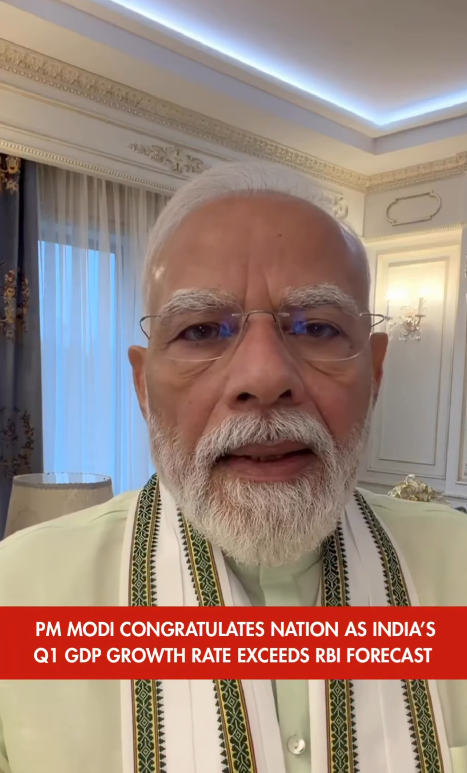
The Fact: Fact: India’s economy grew 7.8% in the April-June quarter, comfortably beating the RBI’s 7% forecast and signalling that growth has remained resilient despite global economic uncertainty and the West Asia conflict. The data, released by the Ministry of Statistics and Programme Implementation on Monday, also marked an improvement over the 6.9% growth recorded in the same quarter last year. At the same time, growth was slower than the 8.6% recorded in the January-March quarter, suggesting that while the economy continues to expand rapidly, momentum has eased somewhat from the previous quarter due to the war. Much of the strength came from manufacturing and services. The manufacturing sector grew 9.2%, while the tertiary sector expanded 10%. Within services, financial, real estate, IT and professional services recorded particularly strong growth of 12.1%. The secondary sector as a whole grew 8.6%. Agriculture, however, remained a relative weak spot. The primary sector grew 2.9%, with agriculture and allied activities growing 3.6%. The performance was stronger than many had expected. The RBI had forecast 7% growth for the quarter, while some economists had anticipated growth closer to 7.3-7.5%. Following the data, several economists raised their forecasts for India’s full-year FY27 growth.
The Context: The numbers are particularly notable because they came against a difficult global backdrop. The West Asia conflict had raised concerns about crude oil prices, inflation, supply chains, trade and investment. Yet, India’s macroeconomic indicators have remained relatively resilient, although higher crude prices, food inflation and the possibility of an El Niño remain risks for the months ahead. PM Modi welcomed the figures, describing the 7.8% growth as an “exemplary” and “herculean” performance and attributing it to the collective strength and hard work of Indians. PM Modi also used the strong GDP numbers to make a broader pitch for “Swadeshi Bharat” and “Vocal for Local”. He urged Indians to avoid unnecessary purchases of gold, choose domestic destinations for holidays and weddings, and promote the “Wed in India” campaign rather than spending on destination weddings abroad. His argument was that keeping more spending within India would help sustain the economic momentum and contribute to the goal of a “Viksit Bharat”.
The Peek Insight: The 7.8% figure is undoubtedly good news for the Indian economy. It suggests that manufacturing and services remain strong, domestic economic activity has held up better than feared, and the West Asia crisis has not yet delivered the shock that many had expected. The latest data shows that services and manufacturing are doing much of the heavy lifting, while agriculture is growing more slowly. That matters because a large share of India’s workforce remains dependent on the rural and informal economy. There is also a second question raised by the Prime Minister’s response. His appeal to avoid unnecessary gold purchases, foreign holidays and overseas weddings is essentially an argument for keeping Indian spending within the domestic economy. But when the government asks citizens to make such choices in the name of economic growth, it also raises a broader question about where the line lies between encouraging responsible consumption and telling people how they should spend their own money. For now, the headline is that India is growing faster than expected. The harder story is whether that growth can remain durable and equitable.
A Rape In Transit: 47 KM Of Missed Warnings
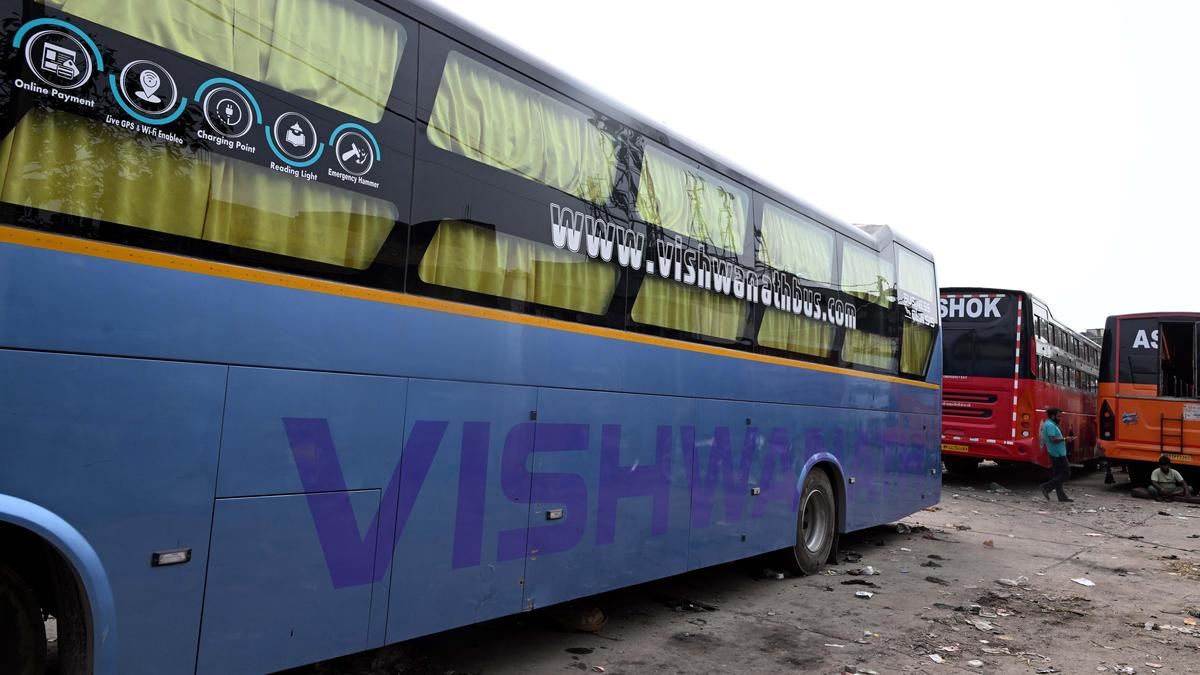
The Fact: The Fact: The investigation into the alleged gang rape of a minor inside a sleeper bus in Delhi-NCR has uncovered a string of safety lapses that existed before the crime took place. The bus had 11 pending traffic challans, seven of which were issued in July alone. The violations included issues involving retroreflective tape, speed limiting devices, permit conditions, and prescribed speed limits. Investigators have also found that the bus’ CCTV camera was not functional, reportedly because the vehicle was undergoing repairs. The bus also had heavy curtains covering its windows, restricting visibility from outside. Such obstructions are prohibited under safety requirements for commercial passenger vehicles introduced after the 2012 Delhi gang rape. Despite these red flags, the bus travelled around 47 km from Greater Noida to Kashmere Gate without being stopped at a police checkpoint. The driver and conductor were arrested within four hours of the incident being reported, and police have seized the bus for forensic examination.
The Context: The incident took place on August 4, when the 16-year-old Class 11 student from Mainpuri was stranded at Greater Noida’s Pari Chowk amid heavy rain. She had reportedly got off at the wrong location while trying to reach her relative in Noida. According to reports, the empty sleeper bus stopped, and the girl boarded after the driver and conductor allegedly told her they were heading in her direction. She was allegedly gang raped inside the moving bus and later abandoned near Kashmere Gate. What makes the case particularly disturbing is how many opportunities existed for someone to notice the bus. It travelled through the Noida-Greater Noida Expressway and into Delhi, passing major entry points including the Chilla border and Mayur Vihar. Yet investigators say there was no police check during the journey. The bus’ own CCTV was also unavailable, while its curtains effectively blocked outside visibility.
The Peek Insight: The most uncomfortable question this case raises is how so many warning signs were allowed to coexist on one vehicle. A bus with 11 pending challans, a non-functional CCTV system, and curtains blocking visibility was still operating on an interstate route. It then travelled nearly 47 km without a police check. Each failure may look administrative on its own. Together, they created an environment where a crime could remain hidden. The fact that police eventually traced the bus through CCTV footage from outside the vehicle also exposes the contradiction. Surveillance existed along the route, but the safety system inside the bus itself had failed. The rules around visibility, tracking and passenger safety were strengthened after the 2012 Nirbhaya case precisely because buses and other enclosed vehicles can become spaces where crimes are difficult to detect. Thirteen years later, the question still is why a bus that appears to have violated several of them was still allowed to operate.
No Double Game On Terror: Modi's Message To The World
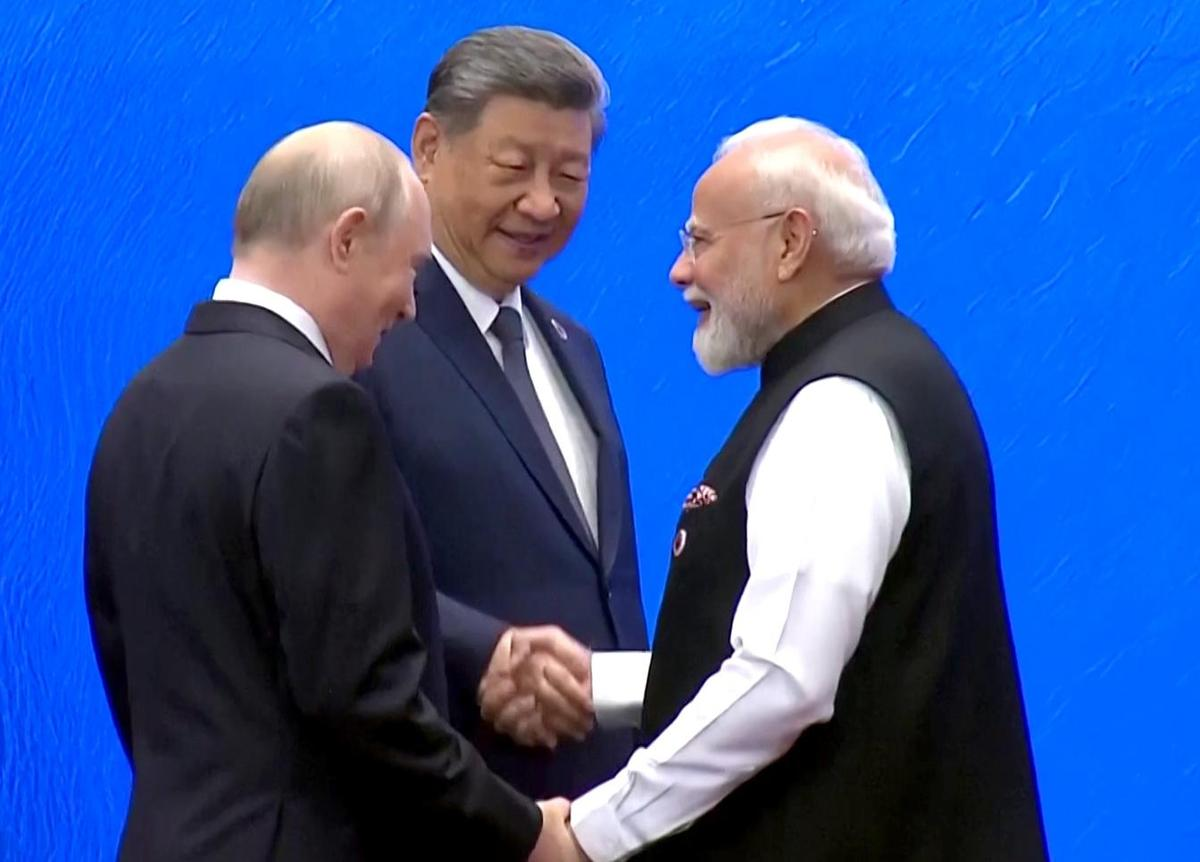
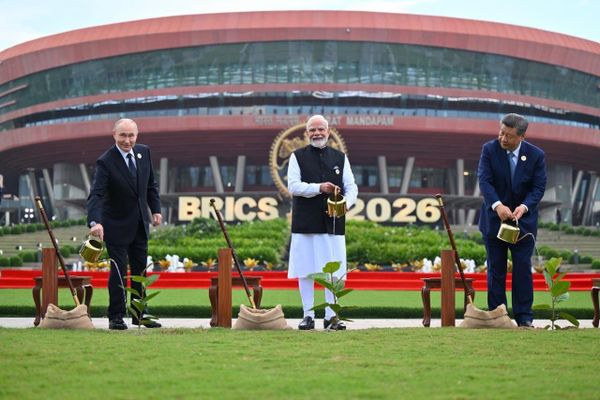
The Fact: PM Modi used the SCO summit in Bishkek to highlight India’s two recurring concerns, terrorism and sovereignty in connectivity, calling for a united stand against terror and warning that there can be no “double standards” in tackling it. PM Modi said this with Pakistan Prime Minister Shahbaz Sharif in attendance. Addressing the leaders of the 10-member Shanghai Cooperation Organisation, Modi called for the dismantling of the entire terror ecosystem, including its financing, recruitment, radicalisation and safe havens. He also said terrorism must never be treated as a strategic asset — a message that has particular resonance for India given its long-standing concerns over Pakistan-based terror groups. PM Modi also made India’s position on regional connectivity clear. While backing greater cooperation on roads, railways, trade routes and other links across the region, he stressed that connectivity projects must respect the sovereignty and territorial integrity of countries. For New Delhi, that position is closely linked to its opposition to the China-Pakistan Economic Corridor, which passes through Pakistan-occupied Jammu and Kashmir. On the sidelines, PM Modi also held a meeting with Russian President Vladimir Putin, during which the Ukraine war came up, and had a brief exchange with Chinese President Xi Jinping. His interaction with Pakistan Prime Minister Shehbaz Sharif, however, remained limited.
The Context: The SCO began in the 1990s as the Shanghai Five, bringing together China, Russia, Kazakhstan, Kyrgyzstan and Tajikistan to manage border disputes and build confidence. Uzbekistan joined in 2001, when the grouping became the Shanghai Cooperation Organisation.Since then, its agenda has expanded from border security to counter-terrorism, trade, energy, transport and regional connectivity. India and Pakistan became full members in 2017, followed by Iran in 2023 and Belarus in 2024, taking the grouping to 10 members.That expansion has made the SCO particularly significant for India because it brings together countries that are otherwise on very different, and often competing, strategic tracks: India, China, Russia, Pakistan, Iran and the Central Asian states.
The Peek Insight: For India, the SCO is not really a place to resolve its disputes with Pakistan or China. Instead, it is a forum where New Delhi can put its concerns before all the major Eurasian powers at the same table. That is why PM Modi's terrorism message matters even though India has made essentially the same argument at previous SCO summits. New Delhi has consistently pushed the organisation to treat terrorism as a collective security threat rather than an issue that can be viewed differently depending on who is involved. So, does repeating these positions at every SCO summit actually change anything on the ground? There is little evidence of an immediate shift especially given Pakistan's state-backed terror. The organisation remains divided by competing interests, particularly over China, Pakistan, Russia and the West. But that does not make the repetition meaningless. For India, the SCO offers something more modest but still useful, a room where New Delhi can keep putting its red lines on terrorism, sovereignty and connectivity in front of the countries that shape Eurasia.
Public Purse, Private Profit?: The Crores Behind Two Governance Failures
The Fact: What happens to public money after it has been spent? Two recent cases in Delhi, one involving expensive medical equipment gathering dust in government hospitals, the other involving subsidised rice allegedly diverted to private traders point to the same uncomfortable question. In the first case, an audit ordered by the Delhi High Court found sophisticated medical equipment lying unused across 26 government hospitals. At the Delhi State Cancer Institute, a medical cyclotron bought in 2017 for about Rs 15.42 crore, along with other nuclear-medicine and imaging equipment, has remained unused. The reasons range from a shortage of trained staff and specialists to installation problems, lack of space and discontinued reagents. At some hospitals, equipment bought or donated during the Covid-19 pandemic, including ventilators and oxygen concentrators, is also lying idle.
At DSCI, where more than 40% of sanctioned posts are vacant, patients are increasingly being referred outside the hospital for medicines, scans and tests. That means equipment bought with public money remains unused while patients, many of whom came to a government hospital expecting affordable treatment, end up paying private facilities for services that the public system was supposed to provide. The Indian Express reported that this has become a direct burden on patients and their families. The second case concerns the food-supply system. The CBI has registered an FIR against former officials of the Food Corporation of India (FCI), officials of the North Eastern Regional Agricultural Marketing Corporation (NERAMAC) and private traders over an alleged Rs 28.87-crore rice allocation scam. According to the CBI, the FCI’s Delhi region allotted 62,000 metric tonnes of rice to NERAMAC under the Open Market Sale Scheme (Domestic) 2025-26. NERAMAC allegedly lifted about 50,645 metric tonnes at a concessional rate of Rs 23,200 per tonne, against a reserve price of Rs 28,900. The agency alleges that NERAMAC was not eligible for such a non-auction allotment and that the difference represented a potential loss of Rs 28.87 crore to the FCI.
The Context: The two cases are very different. One is about public expenditure that failed to translate into a functioning public service; the other is about an alleged irregular diversion within a subsidised food-supply system. But both expose a weakness that is often hidden by the headline figure of government spending. Buying a machine is not the same as providing healthcare. Allocating subsidised food is not the same as ensuring that the intended beneficiaries receive its benefit. The Delhi hospital audit makes this particularly stark. A cyclotron worth crores can technically be counted as an asset, but if there is no trained manpower to operate it, no appropriate space to install equipment, or no reagents to run a machine, its value to a patient is effectively zero. The Delhi High Court itself described the situation as a “gross waste of public resources”. And the problem is not confined to one hospital. The audit across 26 hospitals found multiple instances of expensive equipment lying unused for different reasons. In some cases, equipment became obsolete or unusable while the system struggled to deploy it in the first place.
The Peek Insight: A government can announce a new hospital, procure expensive equipment, allocate foodgrains or sanction funds for passenger amenities. But the real test is if the machine working, is the doctor available, did the patient receive the treatment, did the subsidised grain reach the intended channel and can a passenger actually access clean drinking water? That is where these two Delhi cases connect. In one, public money has produced machines that patients cannot use. In the other, the CBI alleges that a subsidised commodity intended for a particular channel was instead moved into a private trading network. It is also tempting to turn every such finding into a political argument against one government or another. But that can obscure the larger problem. Public money does not belong to a political party. A machine bought under one government and left unused under another remains a loss to the taxpayer. A procurement rule violated by officials does not become acceptable because the officials belong to a different administration.
'Tunnel' Vision: Through Mud And Darkness, Nepal's Race Against Time
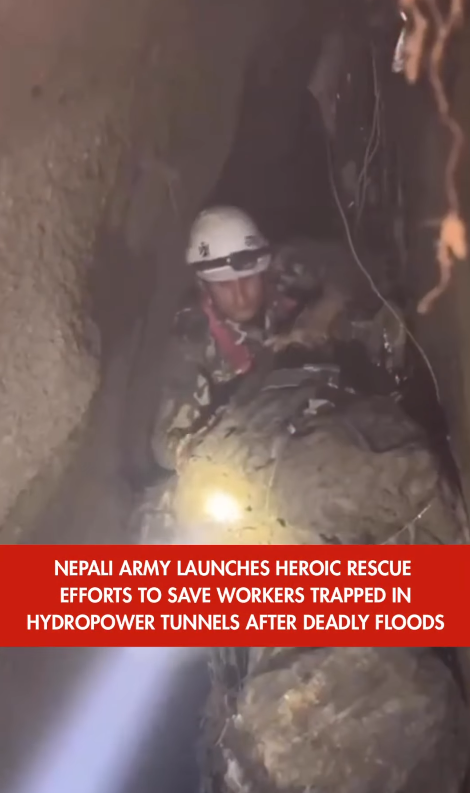
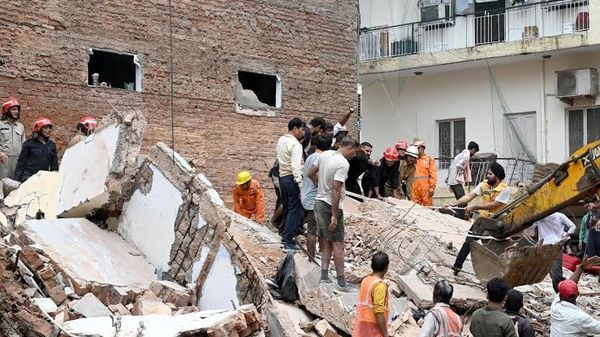
The Fact: Five days after a devastating flash flood tore through Nepal’s Bhotekoshi-Trishuli river corridor, the search for survivors has moved underground, with Nepali Army personnel and specialist teams from India and China entering mud-filled hydropower tunnels where hundreds of workers are still feared trapped. The August 26 disaster swept through Rasuwa and neighbouring districts, destroying roads, bridges, homes and hydropower infrastructure. By September 1, Nepal’s authorities had reported more than 1,000 deaths, around 4,000 people still missing and more than 11,800 rescued. The scale of the disaster has made the tunnel rescue one of the most difficult parts of the operation. At least 933 workers were estimated to be trapped or unaccounted for across 11 hydropower projects, most of them along the Bhotekoshi-Trishuli corridor. At the Upper Trishuli-1 project alone, around 100 workers were believed to be inside a tunnel. Rescuers have since managed to pull hundreds of people out of the tunnels, but several passages remain blocked by mud, boulders and water. The Nepali Army is using excavators, drills, controlled blasts and pipes to pump air and create access points.
The Context: The immediate cause of the disaster is still being investigated. The flash flood appears to have originated in the high mountains before surging down the Bhotekoshi river system. The event was likely linked to an ice-rock avalanche, rather than describing it simply as a glacier collapse. The combination of steep Himalayan terrain and narrow river valleys then amplified the impact, turning the surge into a wall of water, rock and debris. This is important because Nepal’s hydropower expansion is concentrated precisely in these valleys. The country’s geography offers enormous potential for hydropower, but the same steep slopes, unstable geology and fast-flowing rivers also expose projects to landslides, avalanches, glacial hazards and sudden floods. The August disaster has inevitably revived comparisons with earlier Himalayan catastrophes, including the 2021 Chamoli disaster in Uttarakhand, where a sudden rock-and-ice avalanche sent a destructive debris flow through river valleys and hydropower infrastructure
The Peek Insight: What makes the Nepal disaster particularly disturbing is not only the scale of the flood, but where so many people were when it struck. Hundreds of workers were inside tunnels built to support Nepal’s hydropower ambitions. When the flood came, those tunnels, designed to carry water and support electricity generation, became places from which rescuers now have to extract people. The bravery of the rescue teams is extraordinary. Soldiers and specialist rescuers are entering unstable, debris-filled passages, drilling through rock and mud and trying to establish contact with people who may have been trapped for days. The disaster raises a harder question about how Himalayan infrastructure is planned. Nepal needs hydropower for its economy, and India has a major strategic and economic interest in Nepal’s electricity sector. But the rush to build projects in steep mountain corridors has to be matched by a much more serious assessment of geological and climate-related risks.
And finally,
Indian news needs a new mainstream
We’ve all seen it enough: TV debates chasing noise, newspapers weighed down with complexity, and social media flooded with misinformation. But none of that means you should be left confused, misled, or disconnected from the truth.
Join us in building a space where clarity cuts through chaos, and the truth comes above all numbers!
Thank you for reading,
Team Peek TV