Your PEEK Into The Day: 5 Stories That Deserve The Front Page

Peek TV | September 10, 2026
Protest And Punishment: Courts Draw The Line
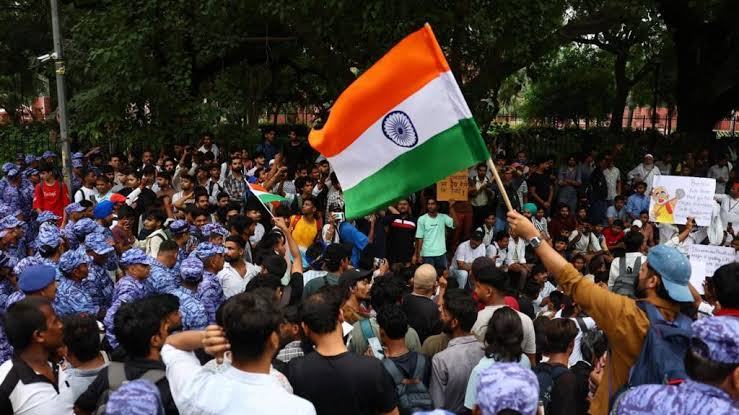
The Fact: Protest is not a crime, dissent is not a security threat and a book is not evidence of criminality. Across three recent cases, courts have had to remind the State of something as elementary as this. The Supreme Court on Wednesday questioned how a Greater Noida Magistrate could issue a notice to a student who participated in the July Cockroach Janata Party protests, just days after the Supreme Court itself had cancelled FIRs against the protesters nationwide and barred coercive action against them. CJI Surya Kant questioned how the magistrate had “dared” to issue such a notice despite the Court’s order. The notice was subsequently revoked. This comes days after the Allahabad High Court had delivered an even broader rebuke to the Noida administration. The court quashed the NSA detention of 25-year-old Delhi University graduate Aakriti Chaudhary, who had been detained in connection with an April workers’ protest in Noida. It described the invocation of the NSA as arbitrary and vague, ordered ₹5 lakh compensation to be recovered from the salaries of the officials responsible, and said that the Court’s ‘displeasure’ must be recorded in their service records. It also warned that unchecked bureaucratic excess could turn Uttar Pradesh into an “Orwellian dystopia”, reminding officials that their loyalty is to the Constitution, not the political executive. Meanwhile, in Jammu and Kashmir, the High Court recently quashed the preventive detention of scholar Shafat Maqbool Wani, after authorities relied, among other things, on books found in his possession, his academic engagements and his father’s past association with militancy. The court held that merely possessing books with “dispiriting titles” does not make someone a criminal and found that the authorities had failed to establish any specific activity warranting preventive detention.
The Context: These are three different cases, involving three different people and three different legal mechanisms but the basic question is what happens when the coercive machinery of the State begins treating dissent itself as suspicious? In Noida, a worker’s protest resulted in the use of the stringent NSA against a young graduate. The Allahabad High Court found that the material relied upon did not establish that Chaudhary had encouraged violence; it noted that whatever violence occurred happened after her arrest and said peaceful protest is a democratic “safety valve.” The court held that the District Magistrate’s conduct amounted to a violation of her oath and said the action appeared intended to make an example of her and deter others from exercising their constitutional freedoms. Then came the Greater Noida notice. The Supreme Court had expressly closed the FIRs arising from the CJP protests and barred coercive action, yet an Executive Magistrate issued a fresh bond notice against one of the students. The Supreme Court’s response was ‘how can an executive magistrate do this after a direct order from the country’s highest court?’ The notice was later withdrawn. And in Kashmir, the High Court found that the authorities had not demonstrated any concrete subversive activity by Shafat Wani. The fact that he possessed books, including literature the authorities regarded as “anti-national”, was not enough to justify preventive detention. The court also found that some books had wrongly been attributed to him as their author. The question is can the State use its most coercive powers merely because it dislikes what somebody is saying, reading or protesting about?
The Peek Insight: For the past decade, protest has increasingly been as a threat to public order, to national security, to institutions, sometimes even to the nation itself, and not a regular democratic instrument. Words like anti-national, urban Naxal, conspirator, rioter and security threat have often been used to transform political dissent into a question of criminality. Laws and preventive powers designed for exceptional circumstances have consequently acquired a much larger role in dealing with people whose principal act is often simply protesting, organising or speaking out. These three judgments matter because the courts are now being forced to draw the line again. The Supreme Court is saying that once it has protected protesters from coercive action, an executive magistrate cannot simply recreate that coercion through another process.The Allahabad High Court is saying that peaceful protest is a democratic safety valve, not something the State should suppress to make an example of one person. And the Jammu and Kashmir High Court is saying that possessing a book, however politically uncomfortable its title may be, does not by itself make someone a criminal. The laws being invoked against protesters here are not ordinary administrative tools. The National Security Act, preventive detention provisions and other extraordinary powers exist precisely because they give the State extraordinary powers over an individual’s liberty. Preventive detention is particularly exceptional because it allows the State to detain someone without first securing a criminal conviction for an offence. That is why courts have repeatedly stressed that such powers cannot be treated as routine substitutes for ordinary criminal law. All of this has to be looked at in context because after a decade of protest being villianised and protesters being ostracised, the Jantar Mantar movement has mainstreamed protest again.