Your PEEK Into The Day: 5 Stories That Deserve The Front Page

Peek TV | September 03, 2026
‘Peak’ Injustice?: Who Takes The Heat For Global Warming
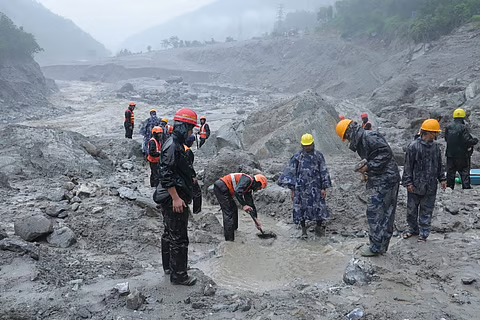
The Fact: Nepal is seeking to change the way the world responds to climate disasters after the devastating August 26 flash floods, which have killed more than 1,000 people and left thousands missing. The disaster, associated with a major glacier collapse in the Himalayas, destroyed settlements and critical infrastructure, including roads, bridges and hydropower facilities. Nepal’s Finance Minister has estimated that rebuilding could cost $4–5 billion, roughly one-tenth of the country’s economy. Nepal Foreign Minister Shisir Khanal has argued that assistance should not be treated merely as charity. He has called for a shift from “aid” to “justice and compensation”, saying major emitters, particularly China, the United States and India, have a historical responsibility to compensate vulnerable countries such as Nepal. Nepal’s Finance Ministry has also sent a formal climate-compensation claim to international partners.
The Context: Nepal’s demand comes against the backdrop of a decades-old debate over climate justice and historical responsibility. Vulnerable developing countries argue that they face disproportionate consequences from a warming planet despite having contributed relatively little to the accumulation of greenhouse gases that caused it. Himalayan countries are particularly exposed because rising temperatures are destabilising glaciers and increasing the risks of floods, landslides and other mountain hazards. Nepal’s position marks a sharper diplomatic approach. Instead of relying only on international aid after disasters, Kathmandu is attempting to frame climate-related assistance as a question of responsibility and compensation. At the same time, India has traditionally stressed that climate responsibility cannot be assessed simply through present-day annual emissions. New Delhi has highlighted per-capita emissions and cumulative historical emissions, arguing that early-industrialised countries bear a much larger share of historical responsibility. This creates a difficult political balance. India is simultaneously a major regional power, a developing country with its own development needs, and one of the world’s largest current emitters. Nepal, meanwhile, is attempting to turn the vulnerability of Himalayan societies into a stronger international claim for climate justice.
The Peek Insight: International climate finance has traditionally relied heavily on negotiated commitments and voluntary contributions, while the economic consequences of extreme climate events are borne locally and immediately. Nepal is therefore pushing the debate beyond humanitarian relief toward the more politically consequential question of who should pay for climate-related destruction. The significance of Kathmandu’s approach lies less in whether China, the US or India immediately accept legal liability, and more in the precedent it attempts to establish. A vulnerable country is directly identifying major emitters and asking them to recognise a responsibility for losses occurring far beyond their borders. This could strengthen demands from other climate-vulnerable states for compensation, resilient infrastructure and stronger international mechanisms.For India, the issue is especially complicated. New Delhi can express solidarity with Nepal and support climate justice while resisting a framework that automatically converts its present-day emissions into financial liability. Its emphasis on per-capita and historical emissions reflects the wider position of developing countries that the burden of climate action should account for who caused the problem, when they caused it, and how much development space remains for poorer nations.
High Tide, Higher Stakes: The Sea Coming For The City?
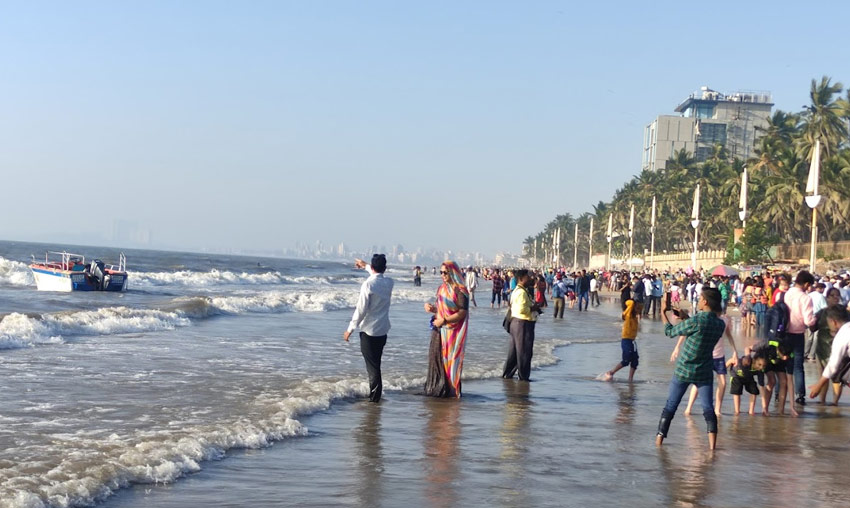
The Fact: Nearly 6 million people residing in Kolkata and Mumbai are at the "immediate risk" of being displaced due to rising sea levels, according to a UN report. The report titled "Challenges related to sea level rise and ways and approaches to address it" described rising sea levels as one of the most profound threats to populations in both developing and developed states. "In the low-lying deltas of South Asia, in cities such as Kolkata and Mumbai in India, and Dhaka, the defining impact is human displacement, with more than 14 million people at immediate risk of losing their homes to permanent inundation," it said. The report states that it will also affect public health, as it will increase the risk of water-borne diseases and disrupt sanitation. The UN also warned that the world is expected to cross the 1.5 degrees Celsius global warming threshold, which was established by the 2015 Paris climate accord.
The Context: The special report presented by UN Deputy Secretary-General found that global sea levels rose by an average of 4.7 mm per year between 2014 and 2023. In 2024 alone, the rise reached a record 5.9 mm. The primary driver for this is human activity, which has been accelerating the melting of glaciers and ice sheets while also causing the world's oceans to warm and expand. On the other hand, the Intergovernmental Panel on Climate Change (IPCC) projects that global sea levels could rise by around 0.23 metres by 2050. By the end of the century, they could rise by as much as 2 metres. And this remains possible even under very low-emissions scenarios. The consequences would extend far beyond coastal flooding, as floods that currently occur once in a century could become annual events. Rising seas would also push the freshwater-saltwater boundary further inland. This could make coastal aquifers increasingly saline, contaminating freshwater wells and soils and threatening drinking water, agriculture, and irrigation.
The Peek Insight: According to the UN, one in every 10 people globally lives in coastal areas less than five metres above the high-tide line. For millions of people, rising seas are like ticking time bombs. The floods that hit Nepal recently are a living example of what this can look like. Nepal contributes less than 1% of global greenhouse gas emissions, yet it is now paying a massive price for a crisis that could be faced by Kolkata and Mumbai next. This is particularly significant because India ranks third on the list of the world's largest greenhouse gas emitters, with some parts of it beginning to face such a crisis. Mumbai, for instance, struggles with severe flooding almost every monsoon. Even though it is the city's poor drainage system that causes it, it still shows how quickly a metropolitan city can be brought to a standstill by heavy rainfall. The floods in Assam offer another glimpse of what climate change could increasingly look like. Apart from it, Uttarakhand, Himachal Pradesh and Bihar also face the consequences, with floods and landslides becoming an annual reality in these states. Hence, what the UN warns of in the future is already happening in several parts of India. So, while major economies and developed countries, including India, continue to contribute to global emissions, it is ordinary people who are often left to bear the consequences.
Baby, Break And A Broken Career Ladder?
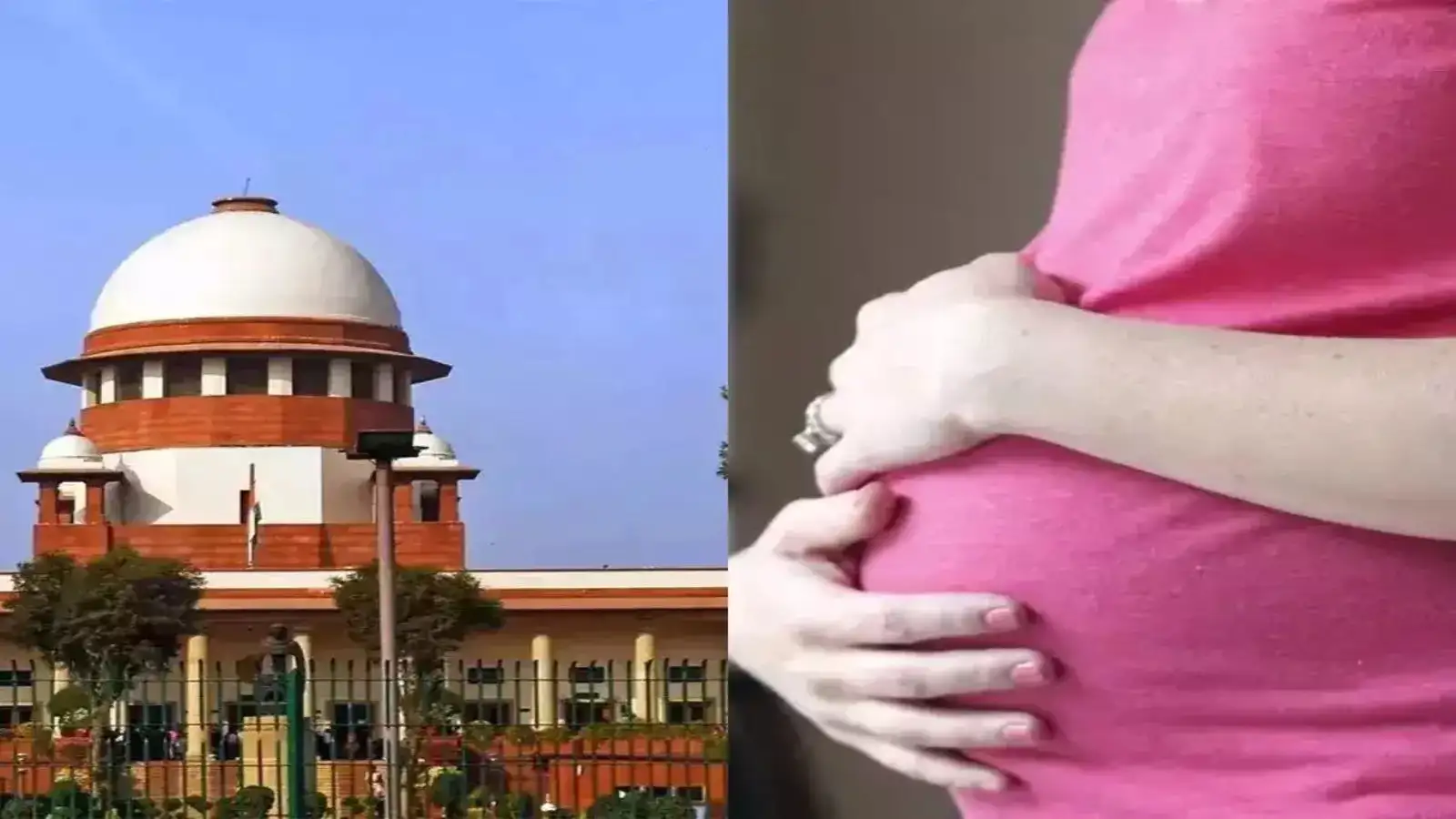
The Fact: The Delhi High Court has ruled that pregnancy and maternity leave cannot be treated as grounds for professional disadvantage, demotion, loss of status or denial of career progression. The judgment came in the case of Rakhi Bisht, a chartered accountant who joined software company HashiCorp as an Accounting Manager in June 2022 at a monthly salary of Rs 2.6 lakh. After taking maternity leave in December 2023, she returned to work in July 2024 to find that her original role had been reassigned. She was placed in the Treasury Department, where she was given clerical duties traditionally performed by a staff accountant, approximately three levels below her designation. Bisht resigned in October 2024 and approached the Delhi High Court, seeking Rs 50 lakh in compensation and anti-discrimination safeguards for private-sector workplaces. The court held that “under no circumstance, can maternity be allowed to become a source of ignominy at the work place”. The court said a woman returning from maternity leave is ordinarily entitled to be restored to the post she held immediately before going on leave. If that post genuinely no longer exists for demonstrable organisational reasons, she must be offered a position as nearly equivalent as possible in terms of pay, grade, status, role, responsibilities, managerial authority and prospects for advancement. The court directed HashiCorp to pay Bisht Rs 10 lakh as compensation and Rs 1.5 lakh towards costs, with the costs to be paid within two months.
The Context: The Maternity Benefit Act, 1961 provides statutory maternity protections, while the Constitution’s guarantees of equality, dignity and humane conditions of work provide a broader legal foundation. The Supreme Court has also strengthened the constitutional understanding of maternity benefits. In May 2025, it held that maternity leave is integral to maternity benefits and connected it with women’s reproductive rights, health, equality and dignity. But the Delhi High Court identified that neither the Maternity Benefit Act, 1961, nor the Code on Social Security, 2020, expressly provides a comprehensive framework for how women should be reintegrated into their workplaces after maternity leave. The court warned that this gap cannot be used to bypass substantive protections through what it called “formal or cosmetic compliance”. The Bisht judgment therefore moves the discussion from whether a woman is technically still employed to whether she has genuinely been allowed to resume her career on substantially equal terms.
The Peek Insight: The most important contribution of the Delhi High Court judgment is that it exposes the difference between formal equality and substantive equality at work. An employer may argue that a woman has not technically been demoted because her salary or designation remains unchanged. But the court’s reasoning makes clear that workplace equality cannot be measured by title and pay alone. Role, responsibility, authority, professional standing and future career prospects also matter. A woman cannot be given a nominally equivalent position while being effectively pushed out of the career track she occupied before maternity leave. The judgment also identifies a structural weakness in India’s legal framework. The law protects maternity, but it does not comprehensively spell out what a fair return-to-work process should look like. The court has therefore attempted to fill that implementation gap by requiring employers to address accommodation, restoration of role and status, lactation support, crèche facilities, grievance resolution and protection against retaliation.
Indian Classrooms Have A ‘Hands-On’ Problem
The Fact: Two recent deaths have once again brought the issue of corporal punishment in Indian schools into focus. On August 20, a six-year-old boy, Pranay Teja, died after allegedly being slapped by his teacher over unfinished homework at a private school in Visakhapatnam. According to police, CCTV footage from the classroom shows the teacher slapping the child. The boy reportedly collapsed shortly afterwards and was taken to King George Hospital, where he was declared dead. A police case was registered and the teacher was arrested. The Andhra Pradesh education department has also constituted a three-member committee to examine the circumstances surrounding the death. A week later, a 10-year-old Class 7 student in East Delhi died after her family alleged that she had been punished at school for not bringing a book. According to the family, the girl was scolded and made to stand at the back of the classroom on July 22, after which she fell ill. She died on August 27. Police said the girl had a history of epilepsy and that the circumstances of her death were under investigation. The teacher has been transferred pending the inquiry. These incidents follow other cases in which alleged school punishment has had fatal or devastating consequences. In February 2025, a 14-year-old Class 8 student in Hyderabad died by suicide after police said he had been reprimanded and allegedly slapped by a teacher. In Jharkhand in 2023, a 17-year-old girl died by suicide after allegedly being slapped by a teacher for wearing a bindi. In Uttar Pradesh in 2022, a 15-year-old Dalit boy died after allegedly being beaten with a stick by a teacher over a wrong answer in a test.
The Context: Corporal punishment has been prohibited in Indian schools for years. In 2000, the Supreme Court took a strong position against corporal punishment and held that children have a right to an education environment free from fear. The Right of Children to Free and Compulsory Education Act, 2009, which came into force in 2010, subsequently made the prohibition explicit. Section 17(1) states that no child shall be subjected to physical punishment or mental harassment, while Section 17(2) provides for disciplinary action against the person responsible under the applicable service rules. The NCPCR’s guidelines include hitting, slapping, kicking, pulling hair, boxing ears and striking a child with an object, but also punishments such as forcing children to stand in uncomfortable positions. Mental harassment includes humiliation, ridicule, derogatory remarks, intimidation and other conduct harmful to a child’s psychological well-being. Section 17 does not, by itself, prescribe a particular criminal charge for every incident. However, serious cases can attract criminal provisions under other laws. Section 75 of the Juvenile Justice Act, 2015, for example, deals with cruelty to children. However, an NCPCR study covering 6,632 children across seven states found that only nine respondents said they had never experienced any form of punishment; 99.86% reported experiencing one or another form of punishment. The survey, conducted in 2009–10, recorded slapping, caning and other forms of physical punishment as well as widespread humiliation.
The Peek Insight: The recurring pattern of corporal punishment in India is concerning. A punishment begins as something a teacher or school may regard as ordinary discipline like a a slap, forced standing, public humiliation or physical exercise. The incident can remain within the school system, particularly when parents are not informed or when the school treats the matter as an internal disciplinary issue. Only when a child suffers serious injury, psychological trauma or death does the incident become a matter of wider public scrutiny. This exposes an implementation gap. The law establishes a prohibition, but prohibition alone cannot create safe classrooms. Schools need functioning complaint and reporting mechanisms, prompt independent inquiry when allegations arise, meaningful accountability for adults who cross the line, and teacher training in non-violent classroom management and child psychology. The deeper lesson also is that discipline cannot be built on fear. India’s legal framework has recognised this for more than a decade and a half. The continuing cases suggest that the next challenge is making every school capable of intervening before punishment becomes abuse, and before abuse becomes irreversible.
Gold On His Chest, Debt On His Back: A ‘Sporting Nation’s’ Broken Promise
The Fact: Even four international gold medals have not translated into a secure livelihood for Amardeep Kumar, a 29-year-old throwball player from Ranchi. He has won gold for India at the Asian Junior Throwball Championship in Malaysia in 2015, the Indo-Nepal Throwball Championship in Kathmandu in 2017, the South Asian Throwball Championship in Bengaluru in 2019 and the South Asian Throwball Championship held in Ranchi in 2026. Yet he currently drives a cab and helps his family sell vegetables at Argora Chowk to support himself and continue competing. Amardeep says he has repeatedly sought government employment and financial assistance through Jharkhand’s sports-support system. He has also said that athletes from states including Haryana, Chhattisgarh and Bihar have received government jobs or other benefits, while his own applications remained unresolved. He has had to borrow money for international competitions; for his 2015 Malaysia trip, he said he borrowed Rs 65,000, with his family and the Jharkhand Throwball Association helping meet the remaining costs. His circumstances came into wider public attention after a video of him selling vegetables circulated online. On September 1, Chief Minister Hemant Soren directed the sports department to take cognisance of his case. The following day, the state sports directorate said it was exploring ways to support him, but also clarified that under the existing state policy, cash rewards and government jobs are not available to athletes participating in sports that are not recognised by the Indian Olympic Association. It said it had asked the Jharkhand Olympic Association to work towards wider recognition and a proper platform for throwball.
The Context: Amardeep’s story sits within a wider problem in Indian sports. Winning for the country does not necessarily translate into financial or professional security for the athlete. Indian Express recently documented the difficult journey of Rishikanta Singh, who became the first male weightlifter from Manipur to win a Commonwealth Games silver medal. Before reaching the Glasgow podium, he had worked washing dishes at a roadside dhaba for Rs 150 a day and trained while sometimes surviving on a single meal. Sharmila Dhankar, who won India’s first Commonwealth Games para-athletics gold medal in the women’s F57 shot put also has a similar story. Her journey involved domestic violence, displacement and severe financial hardship. Her husband took loans and left his job to support her training, while her mother eventually sold half an acre of family farmland to help finance her sporting career. Even athletes at the top of Indian badminton have raised a different version of the same concern. After India’s Thomas Cup bronze in 2026, Satwiksairaj Rankireddy complained about the lack of public recognition for the team. He later clarified that he was not asking for money or grand parades, but for a sporting culture that recognises achievements across disciplines. The Amardeep case adds another layer because throwball is not treated in the same way as Olympic or widely recognised sports within Jharkhand’s existing employment-and-reward framework. That means the problem is partly one of individual support, but also one of policy design.
The Peek Insight: Amardeep’s story should not be reduced to the image of a gold medallist selling vegetables. The more important issue is the institutional gap between sporting achievement and livelihood security. The state government’s response reveals why. An athlete can be good enough to represent India and win international gold, yet the sport in which he competes can determine whether that achievement qualifies him for meaningful state support.If India wants athletes to remain in sport long enough to reach international level, livelihood security cannot depend entirely on whether a particular discipline happens to fit an administrative category. Recognition, employment, training support, competition funding and post-career pathways need clearer and more transparent criteria.
And finally,
Indian news needs a new mainstream
We’ve all seen it enough: TV debates chasing noise, newspapers weighed down with complexity, and social media flooded with misinformation. But none of that means you should be left confused, misled, or disconnected from the truth.
Join us in building a space where clarity cuts through chaos, and the truth comes above all numbers!
Thank you for reading,
Team Peek TV