Your PEEK Into The Day: 5 Stories That Deserve The Front Page


Peek TV | September 04, 2026
Keep Caste Out Of The Temple: Your Birth Cannot Bar You From God
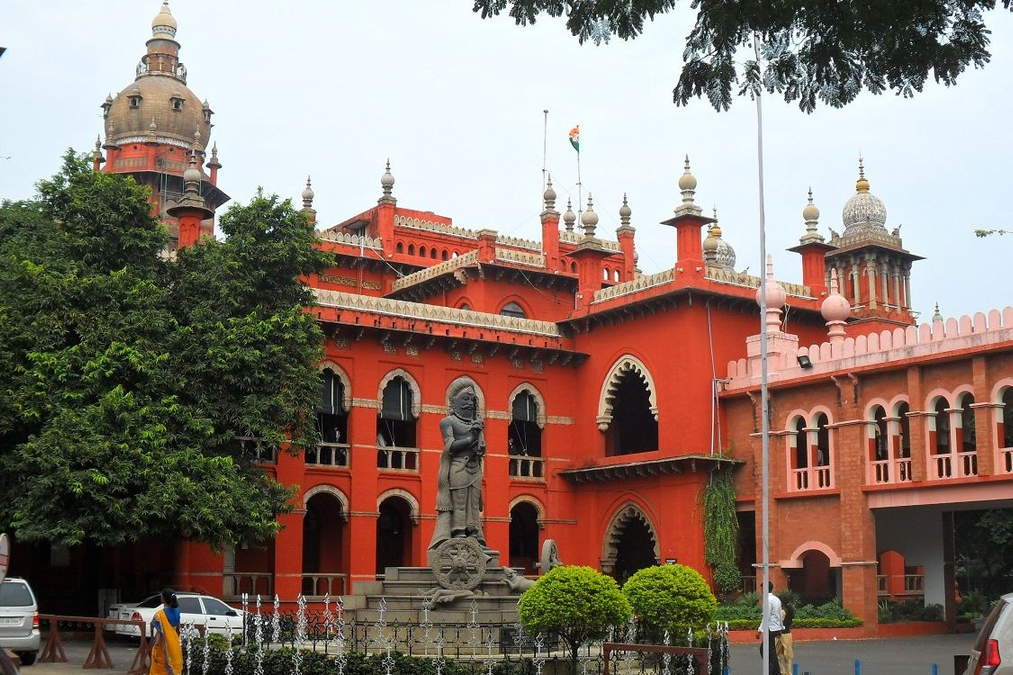
The Fact: The Madras High Court has observed that preventing a Dalit or any Scheduled Caste person from entering a temple on the basis of caste amounts to untouchability. The observation came during a petition concerning the Arulmigu Muthu Mariamman Temple chariot festival. The petitioner had approached the court seeking equal participation for members of the Milagu Kattan Adidravidar community in the festival and directions to prevent private individuals from blocking their entry. The Tamil Nadu government informed the court that a peace committee meeting had already been held and that the festival was open to everyone, irrespective of caste or creed. The government also said that any dispute over “Karaikarargal rights” should be settled before a civil court. The case therefore involved two separate issues, the right of members of a community to participate in the festival, and disputes over traditional or customary rights associated with the temple. The court’s observation made clear that caste-based exclusion from temple entry cannot simply be treated as a local custom or a private dispute.
The Context: Article 17 of the Constitution abolishes untouchability, and the law has consistently treated caste-based exclusion from public places of worship as a serious matter. Similar observations by the Madras High Court in recent cases have stressed that a person cannot be denied access to a temple merely because they belong to a Scheduled Caste. In one such case, the court observed that faith cannot be restricted by caste and that no individual can decide who is entitled to stand before a deity. The government’s position in this case is also significant. It said that the festival was open to all, while disputes over customary or managerial rights should be taken to a civil court. That distinction matters because a dispute over who controls or manages a temple cannot become a justification for excluding an entire community from worship or participation in a public religious festival. Tamil Nadu has witnessed several temple-entry and caste-related disputes in recent years, with courts and local administrations repeatedly being called upon to ensure that constitutional protections are followed on the ground.
The Peek Insight: The Indian Constitution did not abolish untouchability as a matter of principle alone; it was meant to dismantle the social practices through which caste determined where a person could go, what they could access and how they could participate in public life. Temple entry is therefore not merely a question of religious custom when people are being excluded because of their birth. That is also why the distinction between customary rights and access to worship matters. Communities may have genuine disputes over the management or traditional conduct of a festival. Those disputes can be settled through the appropriate legal process. What cannot be allowed is for such disputes to become a route to caste-based exclusion. The recurring need for courts to intervene in such matters also points to a larger gap between constitutional guarantees and social reality. A law can abolish untouchability, but its promise is meaningful only when local authorities ensure that those protections are actually enforced.
SIRprise, SIRprise: The New BJP MP Is Suddenly Voteless
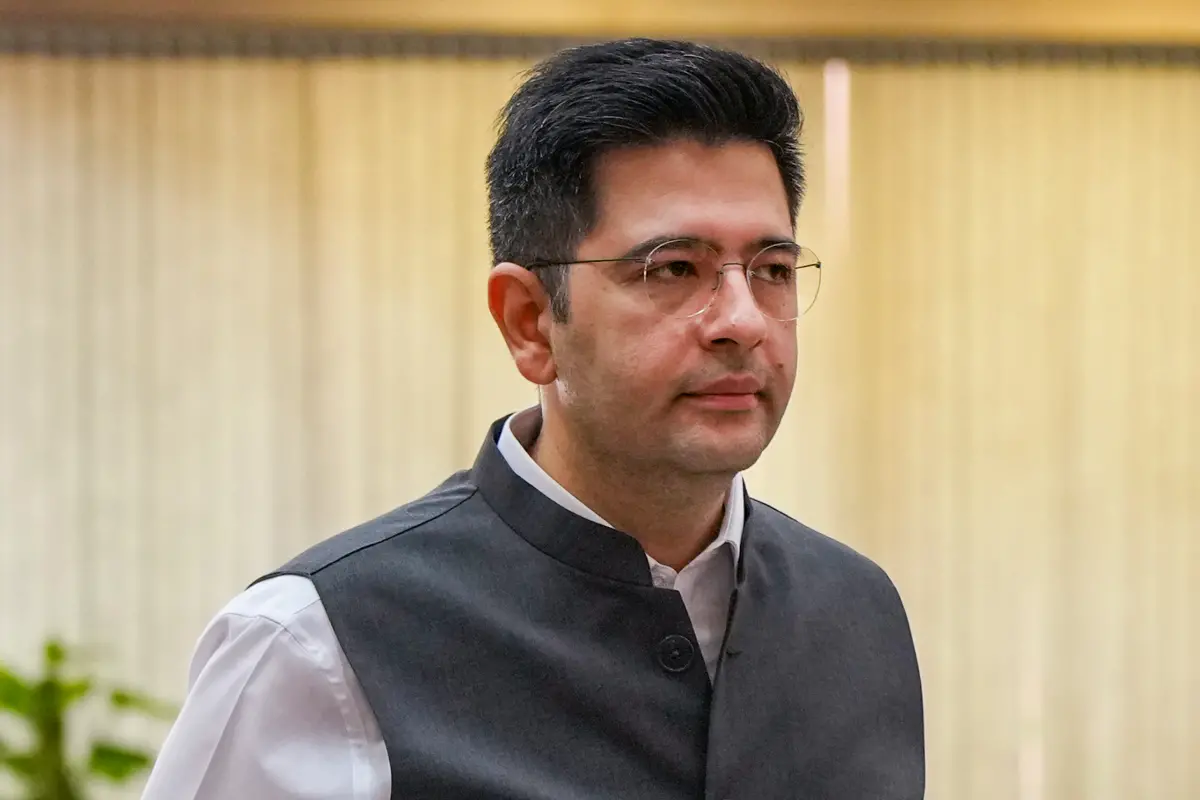
The Fact: Almost a month after Punjab released its draft electoral roll, Rajya Sabha MP Raghav Chadha alleged that his name has been deleted from the published list. The reason for the deletion has been marked as “permanently shifted”. Slamming the ruling AAP government in a post on X, Chadha alleged that his name was deleted as part of a “political vendetta”. “The AAP government in Punjab has now taken its politics of revenge to the draft electoral rolls,” the youngest Rajya Sabha MP wrote. The AAP government, meanwhile, said that the addition or deletion of a name under the SIR does not fall under the jurisdiction of the state government. It is, instead, the Election Commission that is responsible for the exercise. Apart from Chadha’s, more than 20 lakh names have been deleted from the state, which is estimated to be almost 10% of Punjab’s pre-SIR electorate. The state’s final electoral roll is scheduled to be released on October 12.
The Context: Chadha’s allegation rests on the claim that while the SIR is an ECI exercise, the field-level verification is carried out by officers working under the state government. The SIR guidelines also provide for the inclusion of public representatives, artists, sportspersons and MPs in the draft roll. Chadha has therefore alleged that the omission of his name was a result of political pressure on state officials. The Punjab government has rejected the allegation, pointing instead to Chadha’s voter registration history. It said that since he has been living in Delhi, it was his responsibility to update his electoral registration. The party also alleged that he was “trying to get his voter registration made in Delhi through a backdated process”. In the 2022 Rajya Sabha elections, Chadha had declared himself a registered voter in Delhi’s Rajinder Nagar. However, in the 2024 Lok Sabha elections, he voted from Mohali after entering the Rajya Sabha as Punjab’s MP.
The Peek Insight: Raghav Chadha’s case presents a political contradiction. If his allegation that state officials can be pressured by a government to influence the electoral roll through transfers and administrative machinery is correct, then he is effectively making the same case against the SIR that the opposition has been making all along. Opposition leaders have alleged that the process can be vulnerable to political interference and can result in genuine voters being wrongly excluded. The irony is that Chadha’s own political position on this question appears to have changed with his party. As an AAP leader, he had repeatedly accused the Election Commission and the BJP of voter manipulation. Four months after crossing over to the BJP, he is making the opposite argument, placing the responsibility on the Punjab government and not the ECI. Nearly 20 lakh names have been deleted from Punjab’s draft electoral roll, while nearly 50 lakh have been deleted in Delhi. Whether those deletions are ultimately justified or corrected, the scale alone makes the accuracy of the process a legitimate public concern.
BJP Supporters ‘Swatantra’ From Law?: Cracked A Head, Walked Free
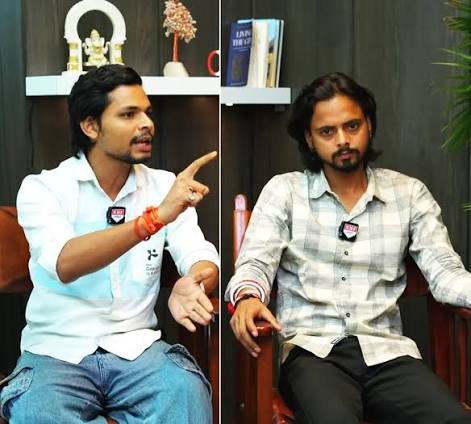
The Fact: A video of self-proclaimed Hindutva activist Swatantra Bhardwaj has gone viral in which he claims to have brutally assaulted Sanjay Jatav, the father of Dalit student Nishu Azad, during the student protest Delhi’s Jantar Mantar. Speaking on a podcast, Bhardwaj claims that he “cracked open” Jatav’s head, leaving him with an injury that required 60 stitches. He further boasts that despite the seriousness of the alleged assault, he did not spend even a single night in jail. Bhardwaj attributes this to his political connections, claiming that Delhi minister Kapil Mishra, whom he calls his “elder brother”, made a call to the police that helped secure his release. He also calls PM Modi and Union Minister Chirag Paswan his elder brothers lBhardwaj further says that he was carrying a Delhi Police baton during the protest and that he can move around the city “like the police”, with access to police equipment without having to fill out any paperwork.
The Context: The issue came to light after Nishu Azad publicly appealed to Rahul Gandhi for help, alleging that despite an FIR being filed over the assault on her father, the police had taken no action. Gandhi subsequently questioned Union Home Minister Amit Shah over what he described as the protection enjoyed by Bhardwaj. The Delhi Police, however, has rejected Bhardwaj’s account of the injury. In a ‘fact-check’, the police said that Jatav’s injury was caused by a kada worn by one of the alleged participants. The police said Jatav was examined at RML Hospital and that his injuries were classified as “simple in nature”. The police have therefore disputed Bhardwaj’s claim about the nature of the assault. There is also a larger question around the presence of police personnel in civilian clothes at the protest. The Delhi Police has told the Supreme Court that these were police “spotters” deployed inside the crowd. During Peek TV’s reporting from the ground, we saw both men in civilian clothes using violence as well as anarchic elements among the protesters engaging in violence. Importantly, Bhardwaj’s claims about political intervention have not been independently established. There is no confirmation that Kapil Mishra, or any other political leader named by him, intervened to secure his release.
The Peek Insight: The most disturbing part of Swatantra Bhardwaj’s video is the extraordinary confidence with which he appears to speak about the consequences, or the lack of them. By his own account, he committed an assault serious enough to potentially attract an attempt-to-murder charge, yet did not spend a single night in jail. He then publicly attributes his freedom to political connections and speaks casually about having access to police equipment. Whether or not every part of his account is true, the fact that he feels comfortable making these claims publicly raises a much bigger question about the perception of impunity. If a private individual can claim that political connections can get him out of police custody, while also claiming access to police equipment and the ability to move around “like the police”, what does that say about his perception of the institutions that are supposed to enforce the law?The irony is that while Bhardwaj boasts about escaping consequences, the protesters at the same demonstration faced the full force of the state. Hundreds of FIRs were filed against protesters. Whatever one thinks of the politics or conduct of the demonstration, the law cannot operate on two different standards — one for those who challenge power and another for those who claim proximity to it. This becomes particularly serious when the alleged victim is a Dalit man and his daughter is a young student who had taken to the streets in protest. The protection of a citizen cannot depend on their political connections, their social standing or whether they are on the right side of those in power.
Manipur: A Conflict That India Couldn’t End?
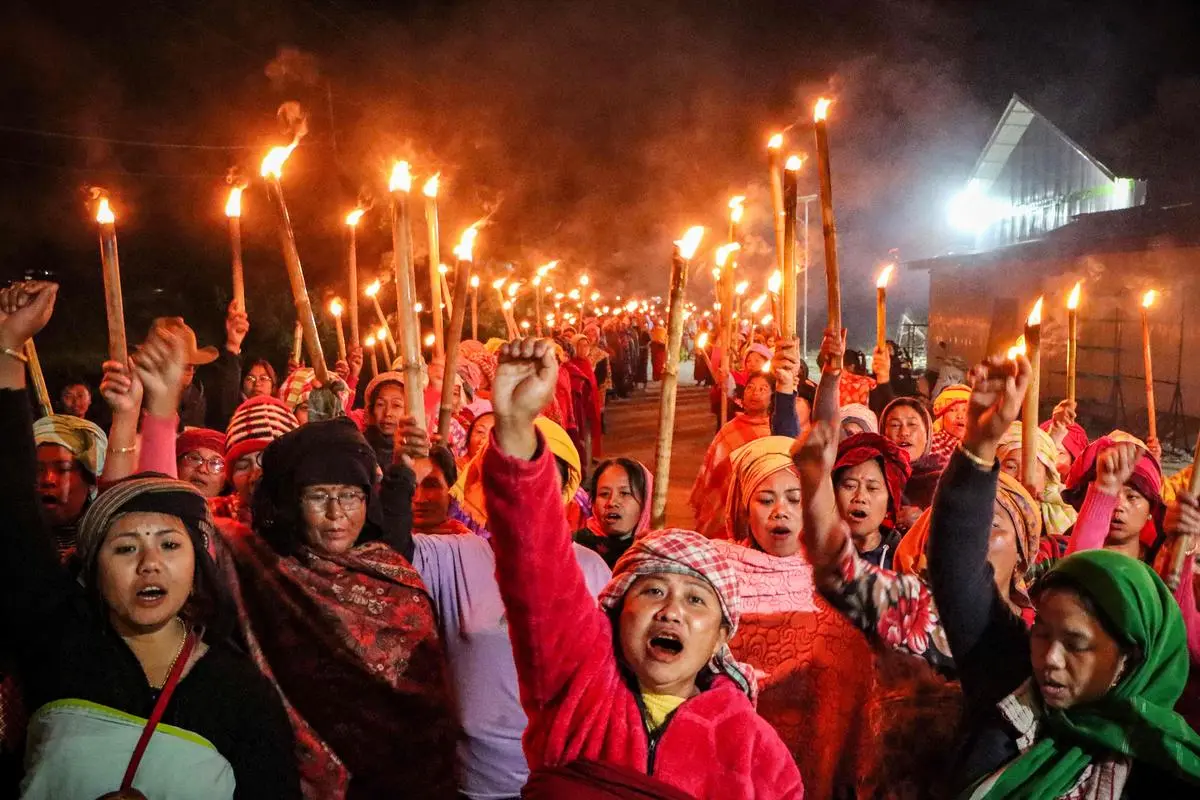
The Fact: At least 306 people have been killed and 49 remain missing in Manipur’s ethnic violence since May 2023, the state’s Home Minister Govindas Konthoujam told the Assembly on Thursday. The figures, which cover the period up to August 31, 2026, were given in response to a question by BJP MLA Sapam Ranjan Singh. The violence between the Meitei and Kuki-Zo communities began on May 3, 2023, after a Tribal Solidarity March was organised in the hill districts to protest the demand for Scheduled Tribe status for the Meitei community. The clashes quickly spread across the state, resulting in deaths, arson, destruction of homes and large-scale displacement. A government response to an RTI query recorded 58,881 people as having been displaced between May 2023 and March 2026, while the latest Assembly figures indicate that more than 28,000 people continue to live in relief camps or temporary locations. The crisis also resulted in a major political intervention. President’s Rule was imposed on February 13, 2025, following the resignation of then Chief Minister N Biren Singh, and was revoked on February 4, 2026, when a BJP-led NDA government headed by Yumnam Khemchand Singh took office.
The Context: More than three years after the violence began, Manipur remains divided along deeply entrenched ethnic lines. The conflict produced prolonged displacement, segregated communities and a political and administrative crisis that has outlasted multiple phases of governance. President’s Rule, imposed in February 2025, was followed by the return of an elected government in February 2026. But a change in administration has not, by itself, resolved the underlying conflict. The state continues to deal with displacement, competing territorial claims and violence involving multiple communities. The latest figures themselves demonstrate the persistence of the crisis with 49 still missing more than three years after it began. The institutional failures were evident from the earliest months of the conflict. In August 2023, the Supreme Court described the situation as an “absolute breakdown of constitutional machinery”, criticised the state police investigation as lethargic and questioned whether the police had lost control of law and order. The Court subsequently put in place mechanisms for relief, rehabilitation and the monitoring of investigations. The Union government also constituted a Commission of Inquiry in June 2023 to examine the causes and spread of the violence and possible lapses by authorities or individuals. Yet the central problem of accountability and reconciliation have struggled to keep pace with the scale and duration of the crisis. The result is a state in which physical separation between communities has increasingly become a reality, while thousands of people remain unable to return to their homes.
The Peek Insight: The most disturbing fact about Manipur is that more than three years after the violence began, the numbers are still being counted as though the country is witnessing a crisis that never quite ended. Manipur should force us to confront questions about what citizenship means when the state cannot provide equal protection to its citizens during a prolonged period of ethnic conflict. The response of the Union government has also faced sustained criticism. Prime Minister Narendra Modi was repeatedly criticised for not visiting Manipur during the most acute phase of the violence, particularly as the crisis continued for months without a visit from the Prime Minister. He eventually visited the state in September 2025, more than two years after the violence began. The criticism reflected a larger perception among many in Manipur that their suffering had not received the political attention it warranted. The consequences of that failure are visible in families that cannot return home, communities separated by armed checkpoints, people who remain displaced and citizens who have spent years waiting for justice and normalcy. This is also why Manipur cannot be reduced to a distant “Northeast issue”. The Northeast has too often remained peripheral to India’s political imagination, but the people living there are not peripheral citizens. A failure to protect a citizen in Imphal or Churachandpur is no less a failure of the Indian state than it would be anywhere else in the country.
Think First, Prompt Later: NYC Bans AI For Younger Students
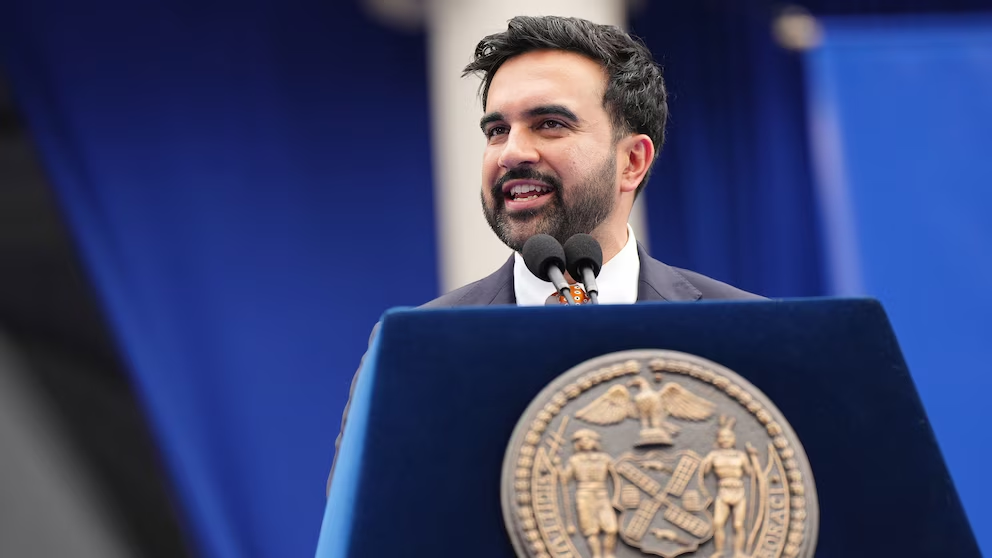
The Fact: New York Mayor Zohran Mamdani has banned students up to eighth grade from using generative AI in public schools for one year. The ban will apply throughout the 2026–27 school year and affect nearly 6,00,000 students. It covers AI chatbots, AI tutors and other generative AI tools used by students for their schoolwork. Around 40 AI tools currently being used in classrooms will also be suspended. High school students will not face the same ban. They will instead get limited, monitored access to AI along with AI-literacy programmes. Teachers can continue using AI for tasks such as lesson planning, while certain assistive technologies for students with disabilities and English-language learners will be allowed. Mamdani says the one-year pause will give the city time to study how AI is affecting students and classrooms. His argument is that children need teachers and classmates, but also need to learn how to work through difficult problems themselves.
The Context: Schools around the world are still trying to figure out how AI should be used in classrooms. Since ChatGPT became widely popular in 2022, students have been able to use AI to write essays, solve equations, explain concepts and complete assignments within seconds. New York City itself briefly banned ChatGPT after its launch, before reversing the decision and later introducing its own AI teaching assistant. Now, Mamdani’s administration is taking a more cautious approach, particularly with younger students. Parents and education groups had actually called for an even longer pause. In April, more than 250 doctors, child-development experts and advocacy organisations called for a five-year halt on generative AI in schools. Some parents and City Council members later called for two years. The administration has settled on one. However, this is not a complete rejection of AI. High school students will still have monitored access, while the city will use the year to study its impact and test selected AI tools.
The Peek Insight: Mamdani’s policy is interesting because it rejects the idea that every new technology automatically belongs in a classroom. For a child learning how to write, think, or solve a problem, getting the answer quickly is not necessarily the same thing as learning. Sometimes the struggle is the lesson. If an AI chatbot writes the paragraph, fixes every sentence, and solves every difficult question, a student may finish the assignment without developing the ability the assignment was supposed to build. A blanket ban, however, is not automatically the perfect answer either. Children are growing up in a world where AI will be unavoidable. Keeping younger students away from it may protect foundational learning, but eventually they will need to understand how to use it responsibly rather than simply fear it. That is why the most interesting part of Mamdani’s policy is the distinction between using AI to replace thinking and using AI to understand technology.
And finally,
Indian news needs a new mainstream
We’ve all seen it enough: TV debates chasing noise, newspapers weighed down with complexity, and social media flooded with misinformation. But none of that means you should be left confused, misled, or disconnected from the truth.
Join us in building a space where clarity cuts through chaos, and the truth comes above all numbers!
Thank you for reading,
Team Peek TV